Reflection by: Miranda Lukatch, Editor, Vincentian Studies Institute

If you’re a perfectionist like me, making New Year’s resolutions is exhilarating and exhausting. The year’s end often prompts me to make an extensive assessment of how life is going and how it—and I—can be improved. I end up with a long list of things I want to change or things I want to do. It’s exciting to think about the end result—a new, improved self—but exhausting trying to figure out the steps to get there. Trying to make my grand goals into things that are actually achievable is a less interesting and far more daunting task. So often my aims are about doing more. Saints Louise de Marillac and Vincent de Paul were champions at accomplishing things. So, facing resolution time this year, I decided to see what kind of wisdom they might have to offer so that I might be able to avoid my common pitfall.
The first thing I found in my quest was that Louise de Marillac also battled perfectionism, and it sounds as if she made many resolutions, some of which survive now in her Spiritual Writings. (These often concern meditations she wanted to make on spiritual topics or acts of adoration she wanted to do. An ambitious soul, sometimes she drew up a daily schedule for them.) But she learned that “once a year is quite enough to delve into this kind of research . . . recognizing our weakness.”[1] She added, “We’re under an illusion if we think ourselves capable of perfection, and still more so if we think ourselves capable of perfection by watching closely the slightest movement or disposition of our soul. . . . It’s useless, even dangerous, to be forever analyzing our soul and picking it apart.” She cautioned her followers not to be “like those persons who become bankrupt instead of amassing riches because they refine everything in the effort to find the philosopher’s stone.”[2] This got me thinking that one way to understand the “riches” I already have in myself might be to list the resolutions I would like to make, but then also list the foundation that I have for this goal or steps I’ve already taken, perhaps without realizing it, to make the desired result of them real.
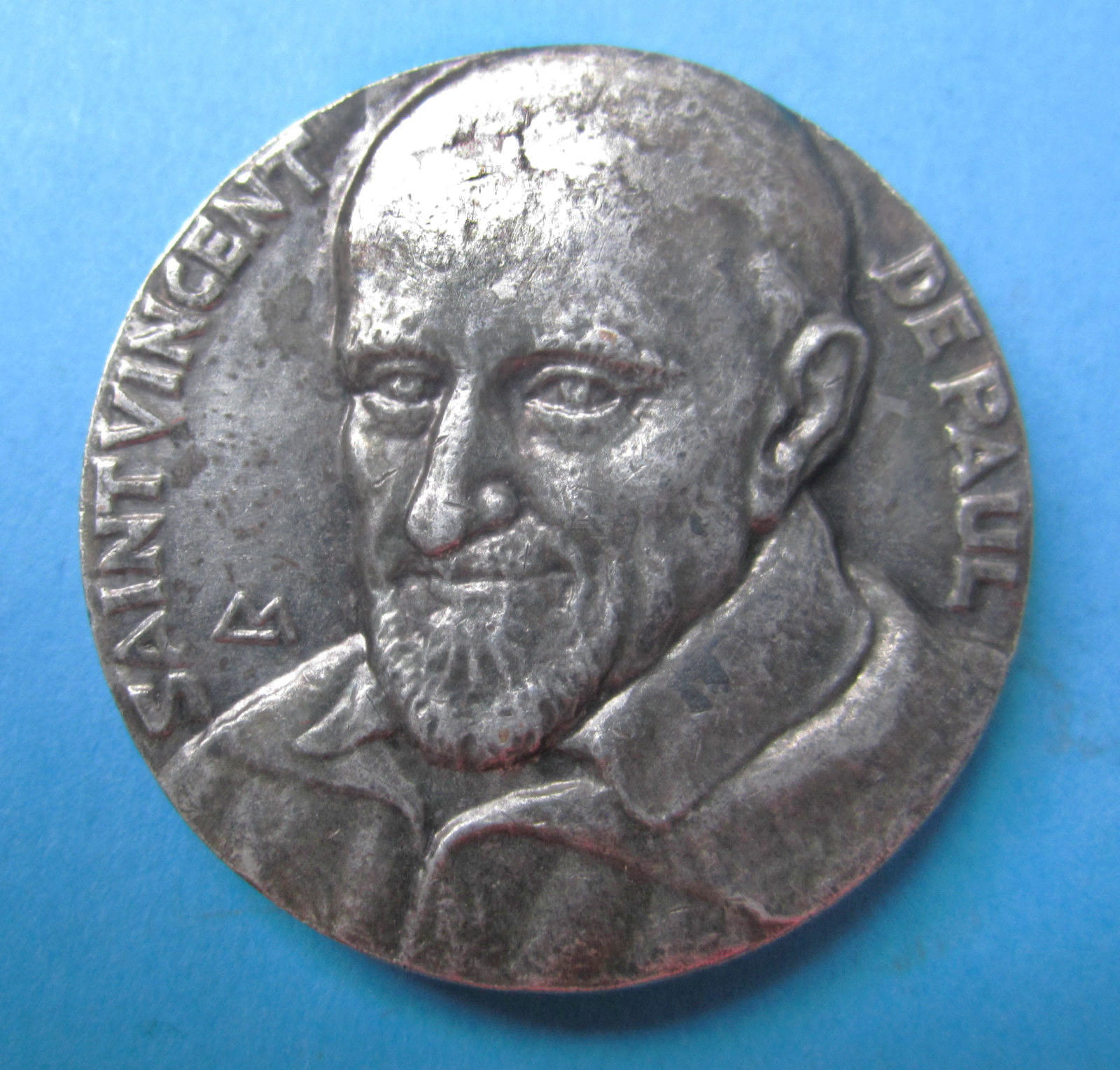
The other piece of advice I found comes from Vincent. It is a reminder to pace myself, and interestingly, it was written at year’s end in December 1630. Vincent said to Louise, “Be careful not to do too much. It is a ruse of the devil, by which he deceives good people, to induce them to do more than they are able, so that they end up not being able to do anything. The spirit of God urges one gently to do the good that can be done reasonably, so that it may be done perseveringly and for a long time. Act, therefore, in this way, Mademoiselle, and you will be acting according to the spirit of God.”[3] As it does so often, Vincent’s wisdom echoes down the years and almost holds a mirror in front of me. Because what so often happens as a result of comprehensive resolutions? I burn out.
As Louise and Vincent cautioned, moderation is the key to success. Limiting myself to one or two resolutions might help me actually put them into effect long term. But, to return to my original question of how to do more, I found that Vincent de Paul had advice for that too. We often formulate it here at DePaul as “it is not enough to do good. It must be done well.” He also said, “God asks first for your heart, and only then for your work.”[4] Doing more should not necessarily be the goal. It’s doing something well, out of a sincere intention of doing good, that matters most. Armed with this knowledge, I think I can set a reasonable—and sustainable—goal for doing good this year, and not just for myself, but for the part of the world that I can impact. What about you? How can the Vincentian advice in this reflection help you set your aspirations for the year ahead?
Reflection Questions
How can you set yourself up for success when setting goals for yourself? How can you make your expectations of yourself reasonable and your goals achievable?
Reflection by Miranda Lukatch, Editor, Vincentian Studies Institute
[1] Quoted in Margaret J. Kelly, D.C. “The Relationship of Saint Vincent and Saint Louise from Her Perspective,” Vincentian Heritage Journal 11:1 (1990): 80. Available online at: https://via.library.depaul.edu/vhj/vol11/iss1/6.
[2] Ibid.
[3] Vincent de Paul, Letter 58, “To Saint Louise, in Beauvais,” 7 December 1630, CCD, 1:92.
[4] Conference of Vincent de Paul to the Daughters of Charity, “The Purpose of the Company,” 18 October 1655, ibid., 10:108.