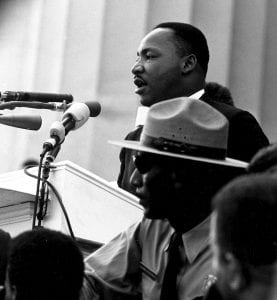
Lawful Assembly 9: To Do A Blessing

This is a podcast interview with Rev. Craig B. Mousin, founder and former Director of the Midwest Immigrant Rights Center and an Adjunct Faculty member at DePaul University’s College of Law and The Grace School of Applied Diplomacy.  Inspired by the Rev. Dr. Silvester S. Beaman’s benediction from the inauguration of President Joseph R. Biden Jr. on January 20, 2021, this podcast urges those seeking to reform immigration law to seek our common humanity.  Recognizing the whirlwind of changes in immigration and refugee law from 2017 to the present, the podcast suggests we have to consider what we owe to those who have contributed to the growth of our nation as we reconsider how best to reform our nation’s laws.  To listen to the benediction of the Rev. Dr. Silvester S. Beaman, Pastor of the Bethel African Methodist Episcopal Church of Wilmington, Delaware, see:  https://bethelwilmington.org

To read more of how Abraham Lincoln understood his motivation for the Emancipation Proclamation, see, Garry Wills, Lincoln at Gettysburg, The Words That Remade America, (Simon & Schuster, New York, N.Y., 1992) pp. 143-44.

For a compilation of the many changes that occurred within immigration law and policy since 2017 and some of the projected proposals for change, see:  https://www.aila.org/advo-media/issues/all/first-100-days

Seeds of the Mission: Guillermo Campuzano, CM

Global Vincentian Family 

Did you know that over 300 religious and lay organizations across the world are considered part of the “Vincentian Family?” A movement that started in countryside churches in France has spread for 400 years and is now present in over 100 countries across all six habited continentsThere are over 4,000 Vincentian priests across the world1, 14,000 Daughters of Charity serve in almost 100 countries2, and the Society of St. Vincent de Paul has over 1,500,000 volunteers worldwide.3  

DePaul University is just one of the many branches of the Vincentian Family Tree. Other branches include the Sisters of Charity of Miyazaki in Japan, the Conference of Frederic Ozanam for Youth in ChileAdamson University in the Philippines, the Daughters of Devine Love in Nigeria, and the Servants of the Poor in Portugal, to name a few.4 Over the last 400 years, these religious orders and lay organizations have grown and spread out across the globe addressing the specific needs of the communities they serve. While there are differences across these branches of the Vincentian Family, they can all trace their roots back to Vincent de Paul and Louise de Marillac. 

A Legacy of Advocacy  

While the Vincentian Family may be more well known for its ministries that directly serve those on the margins, we also have a long, storied tradition of working towards systemic change and advocating with those we serveVincent de Paul used his power and relationships witthe nobility in France to connect resources to the most marginalized. In forming the Congregation of the Mission he worked from within to reform a corrupt Catholic Church. 

Our Vincentian tradition shows us that, “effective charity requires attention to justice and engagement with our social reality. True justice requires that charity must care for those […] passed over and unseen by the dominant culture.”5 

In the late-19th Century, the Daughters of Charity in Los Angeles, California helped secure proper funding for healthcare access in minority communities during smallpox epidemics. Mexican, Native American, and Asian communities did not trust the local government to supply adequate healthcare in the times of the epidemics, but the Daughters of Charity used a combination of direct service and advocacy to serve those communities. 

“In Los Angeles, the Daughters of Charity stepped to the fore to provide service during the smallpox epidemics. Their reputation for kind, caring, and effective nursing encouraged sick Angelenos to enter the quarantine hospital, isolating patients and hopefully retarding the spread of the disease. In knowing city officials needed them, the sisters utilized their political leverage to provide the best care possible, insisting that the city improve conditions in the [quarantine hospitals] and grant adequate funding for the sick poor.”6 

As Fr. Edward Udovic notes, “whether in the seventeenth or twenty-first centuries, Vincentians have understood that some form of organized local, national, and international political advocacy for specific systemic poverty reduction efforts has to be incorporated into their efforts.7 Whether we are working at the United Nations to end homelessness or pushing for education reform at the Chicago Board of Education, advocating for social justice with those on the margins remains a core tenet of the Vincentian mission. 


https://cmglobal.org/en-archive/home/  

https://daughtersofcharity.org/about-us/international-community/  

https://www.ssvpglobal.org/about-us/  

McNeil, Betty Ann D.C., “The Vincentian Family Tree: A Genealogical Study” (1996). Vincentian Digital Books. 6. https://via.library.depaul.edu/vincentian_ebooks/6  

Clark, Meghan J. Ph.D. (2012) “The Complex but Necessary Union of Charity and Justice: Insights from the Vincentian Tradition for Contemporary Catholic Social Teaching,” Vincentian Heritage Journal: Vol. 31 : Iss2 , Article 1. Available at: https://via.library.depaul.edu/vhj/vol31/iss2/1 

Gunnell, Kristine Ashton Ph.D. (2011) “Sisters and Smallpox: The Daughters of Charity as Advocates For the Sick Poor in Nineteenth-Century Los Angeles,” Vincentian Heritage Journal: Vol. 30 : Iss2 , Article 1. Available at: https://via.library.depaul.edu/vhj/vol30/iss2/  

Udovic, Edward R. C.M., Ph.D. (2008) “”Our good will and honest efforts.” Vincentian Perspectives on Poverty Reduction Efforts,” Vincentian Heritage Journal: Vol. 28 : Iss2 , Article 5. Available at: https://via.library.depaul.edu/vhj/vol28/iss2/5  


Anniversaries: A Time to Reflect

Throughout the upcoming year, people will observe many kinds of anniversaries. They may throw a party for a friend or family member’s birthday. Partners or spouses may exchange gifts to commemorate their first date or wedding anniversary. Countries may celebrate the date of their founding. Others still may remember a family member on the anniversary of their passing. All these occasions provide us with an opportunity to pause and reflect on the significance of a particular date tied to events in our past that make the day impactful.

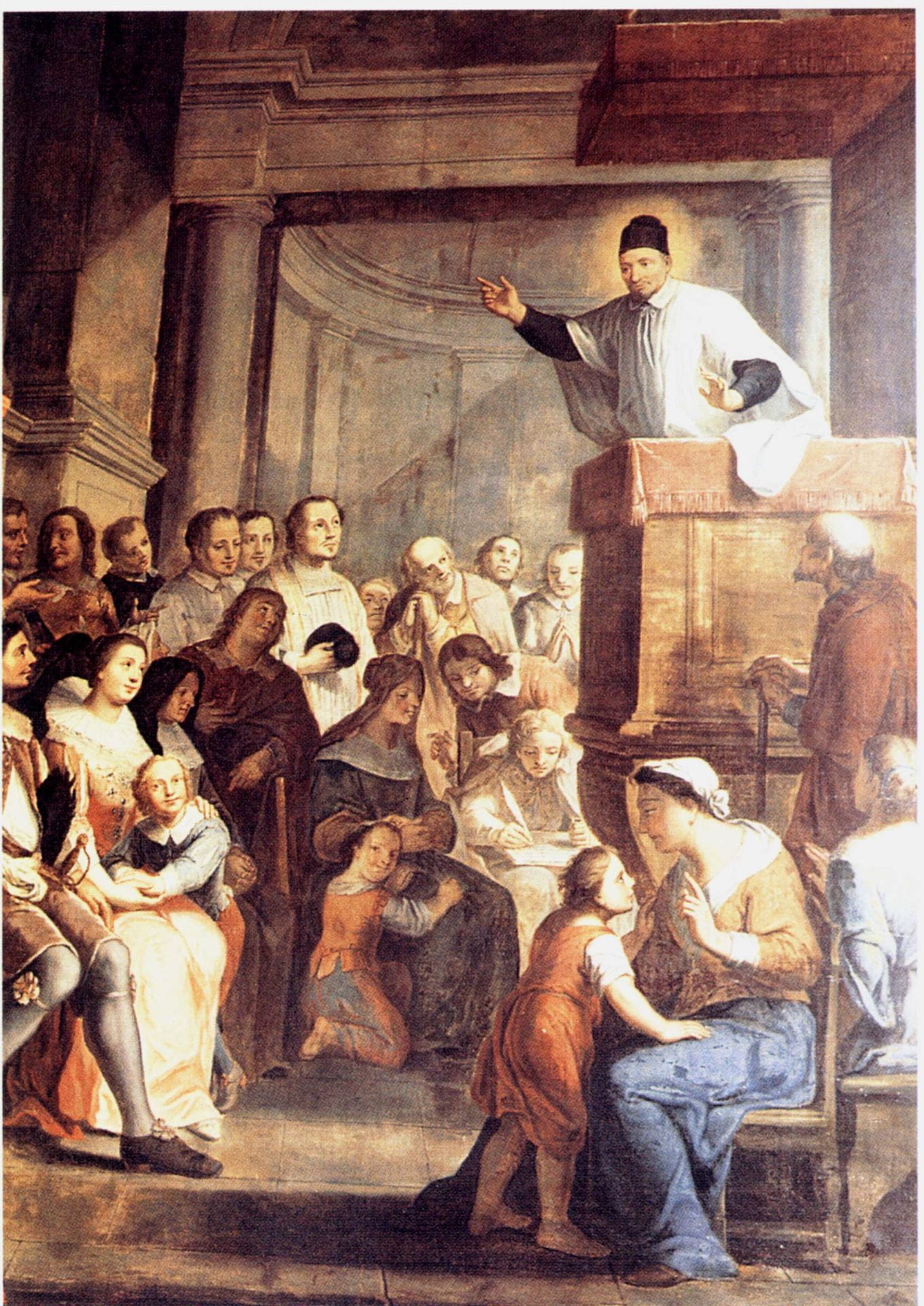
When asked to identify the origin of “the mission,” Vincent de Paul noted that it all began on January 25, 1617. Several days prior he had heard a confession from a sick peasant, and on January 25 he preached at St. James church in Folleville, France, about that transformational experience. It was on that day that Vincent’s life took a turn, and what we now know as the Vincentian Mission was born.1

Today, then, is celebrated as the 404th anniversary of the foundation of the Vincentian Mission. As such, it provides the DePaul University community and the Vincentian Family a time to reflect upon that mission. January 25 is a day to remember the part we have played in this movement that started in a small countryside town in France. This mission has spread across the globe and impacted millions of people, including our own students, faculty, and staff at DePaul

When thinking about the 404-year history of the Vincentian Tradition, how have you played a role in continuing its legacy? What are other anniversaries that you celebrate or observe throughout the year that are important in helping you to remember what is most important in your life?

If you are interested in learning more about Foundation Day, see this new reflection by the Vice President of Mission and Ministry, Fr. Guillermo Campuzano, C.M.:

Anniversary of the Foundation


1 Conference 112, Repetition of Prayer, 25 January 1655, CCD, 11:162-164.

Reflection by:

Michael Van Dorpe, Program Manager for Faculty & Staff Engagement, Mission & Ministry


JOIN US FOR:

Sustaining the Mission: Integrating Vincentian Mission into Our Work at DePaul

Thursday, February 18th

9:30 – 11:00 am

Zoom

The Division of Mission and Ministry invites you to new workshop that is focused on the practice of “mission integration,” that is, ways of applying DePaul’s Vincentian mission to one’s daily life and work. Participants will be invited to reflect on how they might be agents or leaders for mission in their areas of responsibility and influence. Please join us.

Register here: http://events.constantcontact.com/register/event?llr=qiic4w6ab&oeidk=a07ehj28vy045bb4fab

January 25 – Anniversary of the Foundation of the Congregation of the Mission by Vincent de Paul

Revitalizing our Identity at the beginning of the Fifth Century of the Congregation of the Mission” — Theme of the C.M. XLIII General Assembly 2022


Each year on the feast of the Conversion of St. Paul the Apostle, we remember the beginning of the Congregation of the Mission (C.M.). According to St. Vincent de Paul, this happened in Folleville, France, on January 25, 1617, when he preached his “first sermon of the Mission.”(1) Many say that experience with a dying man transformed Vincent’s heart and imbued him with a desire to serve those in need.

This historical event is an important one for DePaul University, though it is not widely celebrated. The Congregation of the Mission (commonly called “Vincentians”) founded our university 123 years ago. DePaul’s history and identity are deeply linked to the values and convictions of the Congregation in the United States.

Originally, Vincent founded the Congregation of the Mission to provide direct service to all those living in poverty, especially “the most abandoned,”(2) and for the formation and education of Catholic clergy in need of reform. These original intentions have evolved with time, especially over the past 50 years.

Today the Congregation of the Mission works together with many other branches of the Vincentian Family. This wider family includes the Daughters of Charity and other orders of religious sisters, as well as lay members of the worldwide International Association of Charities, and the Society of St. Vincent de Paul. They comprise an ever-growing network of people and organizations who provide direct spiritual and material service, advocacy, and the promotion of systemic change.

In many ways, the primary Vincentian mission along with its communal approach have not changed. To better respond to all kinds of needs Vincent summoned as many as he could, rich, poor, humble, and powerful, and used all means to inspire them to serve people living in poverty.(3) As a Catholic priest, Vincent privileged the image of Christ. Based on the Gospel of Luke, ‘the evangelizer of the poor’ [Luke 4, 16-22], he prompted all his collaborators to help the poor directly and indirectly as Jesus did.

The Congregation of the Mission, from the time of Vincent de Paul, and through his inspiration, recognizes itself as called by God to carry out the work of integrally serving the poor. Officially called “Congregatio Missionis,” they are also called “Vincentians” in Anglophone countries, “Paules” in Spain, “Missioners” in Slavic lands, and in Latin America they are known as “Vicentinos.” The unofficial motto of the Congregation: Evangelizare pauperibus misit me [He has sent me to evangelize the poor] sums up the works of Jesus the Congregation endeavors to follow.

While we celebrate the founding of the Congregation of the Mission in 1617, the official date of its institution is noted to be April 17, 1625. On that day, encouraged by Madame de Gondi, the lords of the Gondi family, in whose territories Vincent de Paul served as Chaplain, signed a contract with him in which they provided funding to support a group of priests to serve impoverished people in the countryside. This act gave needed economic sustainability to the project of the Congregation.

Vincent ultimately created the community he had dreamed of. By the day of his death, September 27, 1660, twenty-six Vincentian communities had been formed: nineteen in France, four in Italy, two in Barbary (Northern Africa), and one in Poland. And, by the time of the French Revolution of 1789, when religious communities were suppressed in France, a great dissemination of the Congregation had taken place around the world, with missions in the Middle East, in Asia, and soon thereafter in the Americas. Especially significant were the Congregation’s missionary efforts in China. Today the Congregation has more than 3,000 members, priests, and brothers, serving in 81 countries. They continue to provide a wide array of services including education, spiritual and pastoral care, direct service to the poor, and socio-political advocacy, while remaining dedicated to systemic change and collaborations that will end poverty and homelessness.

As we know, one of their projects was DePaul University, founded in 1898 to serve the children of immigrants in Chicago who needed both access to education and a chance to escape poverty. Without Foundation Day, DePaul as we know it would not exist. That it does, and that we are now a part of more than two million Vincentian Family members worldwide, is certainly something worth celebrating on the 25th.


1) Conference 112, Repetition of Prayer, 25 January 1655, CCD, 11:162-164.

2) Conference 164, Love for the Poor, January 1657, CCD, 11:349.

3) See, for example, Constitutions and Statutes of the Congregation of the Mission (Rome, 1984), 10. Online at: https://via.library.depaul.edu/cm_construles/23/


Reflection by Rev. Guillermo Campuzano, C.M., Vice President of Mission and Ministry


Seeds of the Mission: Morgen MacIntosh Hodgetts

The Power of History to Build a Better Future

The history we tell shapes the culture we build. At DePaul, we look to our Vincentian legacy figures to inform our mission and day-to-day work. Central to the Vincentian mission is the commitment to upholding unheard stories and perspectives that may not be found in history books. DePaul’s library is home to special collections and archives that give direct accounts of those advocating for change in our world. From handwritten letters from our Vincentian family members to the work of Sr. Helen Prejean and the Berrigan family to the history of gentrification in Lincoln Park, students have access to first-hand accounts of a wide berth of information. They also have the support of library staff, who are committed to providing students with the guidance they need to feel confident analyzing primary sources.  

 A Vincentian approach to education equips students with tools to evaluate the context which is so critical to engaging in social justice in our times. As Vincentians, we believe it is not enough simply to learn information. Rather, we take time to reflect on how we can integrate that information into our daily lives. This stems from the Catholic tradition called see-judge-act, which invites us to observe what is going on in the world, analyze the situation, and put a plan in place for social action. In order to build a better future, we must first understand the work of the past. We do this reflective work in community and dialogue with others, whether they be modern-day peers or historical wisdom figures. It calls us to action rooted in a spirit of dignity and love. 

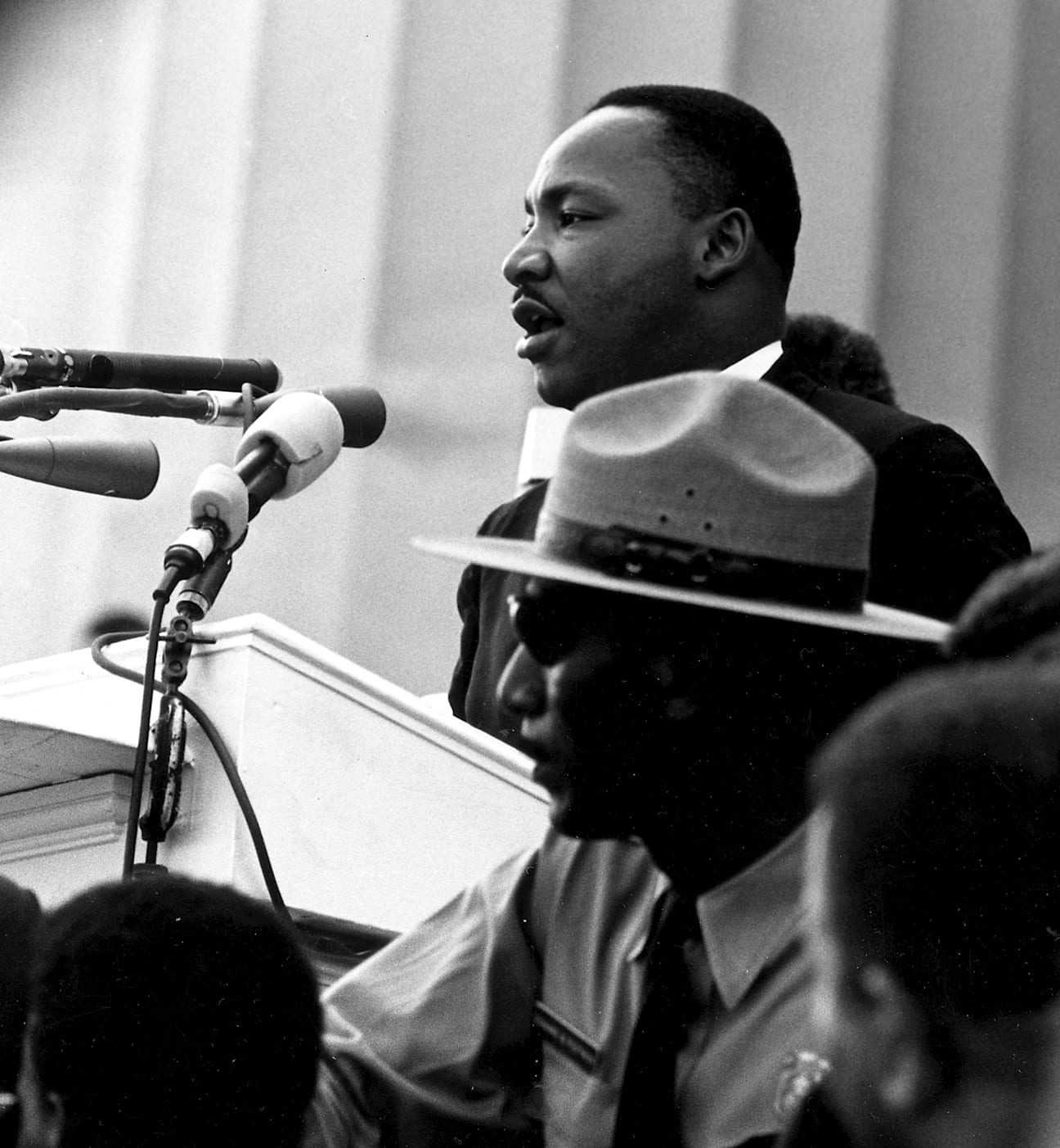
Fighting for Civil Rights in a Fragile Democracy: The Vincentian Spirit and the Legacy of Rev. Dr. Martin Luther King Jr.

“We have waited for more than 340 years for our constitutional and God-given rights. The nations of Asia and Africa are moving with jetlike speed toward gaining political independence, but we still creep at horse-and-buggy pace toward gaining a cup of coffee at a lunch counter.”

Rev. Dr. Martin Luther King, Jr., Letter from a Birmingham Jail, 1963


I am convinced that the very foundation of the Vincentian Spirit began with, and still demands, a specific approach to understanding reality. It is rooted in the experience of all those on the margins of society deprived of their essential rights to food, education, health care, clothing, and housing, as well as all victims of systemic injustice due to their race, sex, sexual orientation, social class or religion. In this sense, I believe that civil rights and democracy are Vincentian themes, and that in these two “signs of the times” we find a concrete Vincentian call for DePaul as an educational institution.

This week we celebrate the memory and legacy of Rev. Dr. Martin Luther King, Jr. We are also witnessing a national transition of governmental power in the United States that has exposed the fragility of democracy. Governmental stability is necessary for the well-being of people living in poverty or on the margins, as social conflict, pandemics, and natural disasters always disproportionately affect the most vulnerable. Vincent de Paul said that the most vulnerable are “our portion” in life, or our responsibility, our place, our call, and our ultimate vocation. (1)

I believe that the struggle to fully construct our democracy framed Dr. King’s call. He fought for civil rights based on the social contract of democracy—a system that demands we commit to preserve and expand the common good by recognizing and respecting the civil rights of all people as equal. Dr. King fought for the civil rights of Black people and communities in defense of, and to fulfill, the democratic dream that all are recognized and respected as equal in both rights and responsibilities. In the U.S., civil rights are to this day an unsettled issue, as the full incorporation of Black and Brown people into the life of the country is clearly unresolved.

Over the past four years we have seen that democracy is a dynamic—sometimes historic—human-made, socio-political system that is always changing. It therefore never seems to be fully functional. The democratic system demands constant monitoring and oversight to prevent the gradual erosion of its quality. In recent years, as democracy has become a domestic concern for the American people, the U.S. has shifted its priority from defending democracy abroad to scrutinizing itself. Our time of being recognized as the global defender and model of democracy seems to have been lost, and our current crisis is creating questions worldwide. Clearly, strengthening our democratic processes will not only benefit U.S. institutions and citizens, but also the international community.

When leaving the White House, President Barack Obama reminded us “citizenship is the most important position in a democracy.”(2) In the twenty-first century, committed citizens of the world continue to be confronted with the challenges of democracy—whether building it from the ground up, restoring it, preserving it in fragile or failed states, or improving the quality of it in so-called strong democracies like the U.S.

In our society the democratic principles that guarantee peace and prosperity are merged throughout the social, economic, and legal fabric. These principles can be found everywhere in the Constitution, and in the essential democratic underpinnings of human rights, fundamental freedoms, equal rights regardless of gender, freedom of speech, as well as in the elimination of differences of treatment on the basis of race, sex, language, social class, physical condition, sexual orientation, or religion. Dr. King clearly understood that non-racial discrimination is one of these essential principles, without which democracy is simply an unfulfilled dream.

We believe, as Dr. King did, that a fully-fledged democracy, with its legal and ethical basis, is a means to achieve peace, security, economic and social progress, sustainable development, and respect for the human rights of all. I am frightened when I read that more and more young people around the world think there are other means to achieve these goals. They see the failure of the political patriarchal model, the failure and corruption of politicians and political parties, and the severe dismantling of the foundations of our democratic process. For me, it is difficult to comprehend that the civil rights fight Dr. King faced over half-a-century ago, which happened in the context of U.S. democracy, reflects the current outcry for racial justice, and the current context of our democracy. What, then, does this say of our democracy?

DePaul University is a Vincentian institution dedicated to education. We are inspired and sustained by the Vincentian Spirit. The signs of the times are demanding we recognize what has been called “education for democracy” by the United Nations: “a broad concept which can help to inculcate democratic values and principles in a society, encouraging citizens to be informed of their rights and the existing laws and policies designed to protect them, as well as training individuals to become democratic leaders in their societies.”(3) Education for democracy involves an active effort to encourage the full participation of citizens in the different democratic processes. This kind of education demands we attend to the peaceful and non-violent coexistence of diverse societies, including access, equity, social justice, individual and institutional ethical behavior, checks and balances of power as well as individual rights and responsibilities.

Education is also critical in empowering citizens to hold accountable those politicians and political parties that hold positions of power, as well as the institutions designed to create laws and policies that safeguard the rights of all.

Founded in the Vincentian Spirit, DePaul needs to be committed, through its educational practice, to strengthen democratic citizenship and promote effective popular participation. As we celebrate Dr. King and hope for a peaceful and non-violent transition of national power, we must continue our fight for the civil rights of all. The peaceful transition of power is one of the essential principles of global democracy.

We must also not forget that in the U.S. the essential democratic right to vote is yet another unresolved issue. It is evident that Black, Brown, and Indigenous people’s access to free and equal voting opportunities are curtailed through mechanisms such as unjust purging of registered voter lists, lack of access to polling places, and long lines at those polling places that are still operational. We need to resolve this issue, among many others, to restore and protect the meaning of democracy in our nation.

The role of the Black community in the preservation of our democracy cannot be ignored. In recent elections the Black community, again, voted in huge numbers and, in many cases, under unfair conditions. They stood up once more to claim their rights, and in so doing, they helped all Americans regain a vision of the real meaning of democracy. As I remember and honor the life of Dr. King, I want to honor and praise the role of the Black community nationwide, which continues to fight for justice and democracy on so many fronts, and often at high personal cost. It is neither fair nor sustainable to expect Black Americans to continue to bear such a disproportionate burden in the fight for civil rights and upholding democracy.

All citizens are called to defend the principles of our democracy: equality, respect, responsibility, agency, and opportunity for all. But now, in this moment in history, I thank Black leaders like Dr. King for their legacy, the very many activist leaders working for justice today, and all Black Americans who continue the fight to uphold democracy. I thank you for your sacrifices, your contributions, and your critical victories. You are living evidence of the struggle to protect and the resilience to uphold our democracy.


1) Conference 180, Observance of the Rules, 17 May 1658, CCD, 12:4.

2) President Barack Obama, Farewell Address, 10 January 2017. See: https://‌obama‌whitehouse.‌archives.gov/‌farewell

3) Guidance Note of the Secretary-General on Democracy, United Nations, 2005. See: Guidance Note on Democracy

Other Bibliography

Campuzano, Guillermo, C.M., Personal Notes, 2018 United Nations meeting on Democracy.

“Conferencias de San Vicente de Paul,” Editorial CEME, XII:4.

King, Dr. Martin Luther, Jr., Letter from a Birmingham Jail (1963). See: https://‌www.‌theatlantic.‌com/‌magazine/‌archive/2018/02/‌letter-from-a-birmingham-jail/552461/


Reflection By: Guillermo Campuzano, C.M., Vice President Division of Mission & Ministry
Vincent de Paul and Accepting Change

In the cold mid-winter of 1656, Vincent de Paul took up his quill pen and began writing a letter to a community member far away. At one point in his epistle, Vincent reflected upon the changeability of the human experience and wrote to his colleague:

…the instability of the human person… is so great… that the person never remains in the same state. What he wants this year, perhaps he will not want the next—maybe not even tomorrow…1

In essence, Vincent was saying to his friend that to be human is to change. From one year, from one day, even from one moment to the next, for better or for worse, change is inevitable.

For all its universality, however, change is still so difficult for us to accept. It can surprise us, discomfort us, frustrate us, and plainly terrify us. No wonder we sometimes lose sight of the joys and benefits that only occur because of change in our lives. Without change, we don’t learn, we don’t progress, we don’t grow. As the journalist and author Gail Sheehy famously said, without change “we aren’t really living.”2

Right now, the year 2021 is still as fresh as new fallen snow. The DePaul community—students, staff, and faculty—are in the midst of an academic year that has summoned us to generate more creativity, resilience, and faith than we knew we had within us. Perhaps now would be a good time for us to look back on 2020, with all of its challenges, and ahead to 2021, with all its hope, and ask how we might harness change to lead us to better things.

What is one change you wish to keep from the year that has just ended? What is one change you wish to embrace in the year that has just begun?


1 Letter 1842, To Étienne Blatiron, Superior, In Genoa, 19 February 1655, CCD, 5:316.

2 See: https://www.goodreads.com/author/quotes/38338.Gail_Sheehy

Reflection By: Tom Judge, Chaplain, Division of Mission & Ministry

Virtual Service Immersion Reflection

Every year, the Division of Mission and Ministry hosts 13 service immersion trips over winter and spring break. On these immersions, students travel to a different city, engage in service and social justice work through a Vincentian lens, and build community with one another. Although COVID precautions prohibited this year, the Division of Mission and Ministry worked with community partners in St. Louis, Cincinnati, and El Salvador to create virtual immersions. Below is a reflection from the St. Louis student leader, Chloe Brougham.

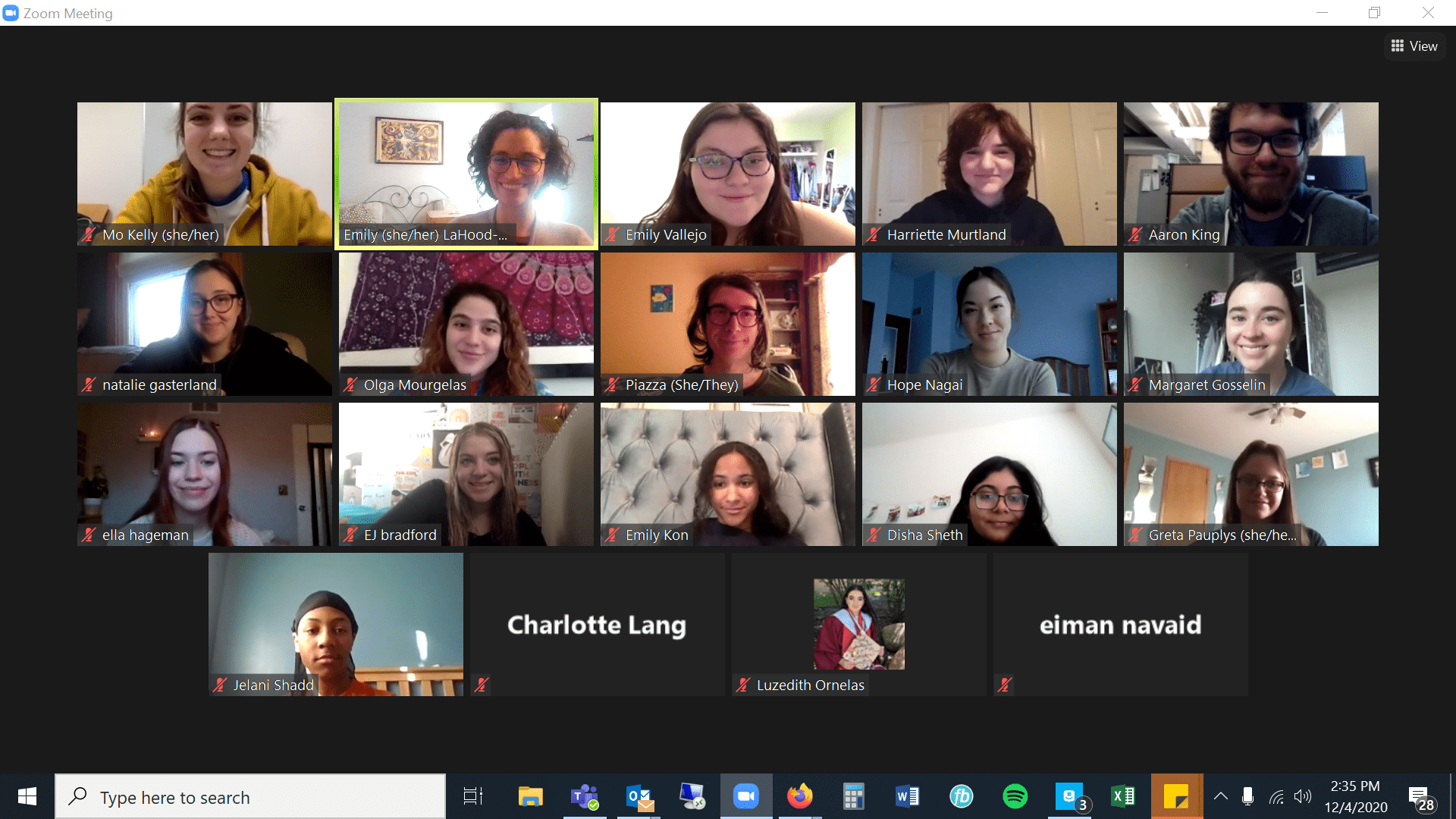
This December, I had the pleasure of going on the first round of virtual service immersions. For four days I zoomed into St. Louis, Missouri to learn about anti-racism through the Vincentian charism.

Each day our group of 13 DePaul students and 1 wonderful staff mentor logged onto three synchronous zoom sessions in which we learned about Vincentianism, St. Louis, social change, and about one another. In between these sessions we did individual reflections, built community over group messages, watched documentaries, participated in a virtual scavenger hunt of St. Louis, and participated in unique ways of spirituality through art, poetry, dance, setting dream intentions, and many other practices.

We engaged in authentic dialogue with many community members in St. Louis. To highlight just a few, we spoke to Sister Ellen LaCapria, a Daughter of Charity, who shared her art with us and spoke about expressions of spirituality. DeMarco Davidson, an organizer and activist who was on the ground and active in the 2014 Ferguson protests after the murder of Michael Brown, shared his story and spoke to us about acknowledging our part in systematic oppression. Kaveh Razani, an artist, business owner, and member of Cherokee Street Community Improvement District spoke with us about gentrification, cultural displacement, and his use of moral imagination to combat the cultural erasure as Cherokee Street is becoming developed.

The conversations we had with Sister Ellen, DeMarco, Kaveh, and others in St. Louis completely blew me away. These dialogues are what I will carry with me through life, hearing the stories and experiences of those on the ground making change provided insight and wisdom that we can’t get from watching the news, reading books, scrolling social media, or even in our classes; these were profound experiences of authentic dialogue, person to person.

Our group had so many connections to your Vincentian family who lives in a different city and who have different lives experiences. We had artists, activists, business owners, and Vincentians in our group who all could relate the stories and wisdom shared by Sister Ellen, DeMarco, and Kaveh. In light of all I have learned in the virtual immersion I hope to continue to be able to hold those sacred stories, seek out more stories from those most impacted by systematic oppression and learn from those working on the ground.

I think back to our Vincentian origins, of St. Louise de Marillac making the brave and unprecedented choice to have the Daughters of Charity not be cloistered, to instead go out in the streets and to be with those affected by oppression. While quarantine has left me feeling hopelessly cloistered, virtual immersion felt like a practice of community that Louise would be proud of.

When Shadows Give Way to Light

“I remain the daily subject of that boundless Mercy. The mists of Night and darkness dispersed, and if even at the Eleventh hour, Yet permitted to share in the Vineyard and gather the fruits of Eternal Life. Glory, glory, glory forever, forever, and forever.”1

As we begin the new calendar year, we celebrate the Feast Day of one of the recognized saints in the Vincentian tradition, Elizabeth Ann Seton (née Bayley). She is the namesake of DePaul University’s residence hall, Seton Hall.

Born August 28, 1774, Elizabeth was a daughter of Colonial New York. Married to William Magee Seton, a Manhattan businessman, Elizabeth had five children and helped start the first charitable association managed by women in New York City, the Society for the Relief of Poor Widows with Small Children. However, Elizabeth was shortly to undergo great hardships. The Seton family business went bankrupt, and then, in 1803, her husband died while on a visit to Italy. It was there that Elizabeth was introduced to Catholicism, which she converted to in 1805. In 1809 Elizabeth moved to Emmitsburg, Maryland, where she founded the Sisters of Charity of St. Joseph’s, the first society of religious women established in the United States. Soon thereafter she became known as Mother Seton.

Mother Seton modeled the society’s foundation on the Daughters of Charity, begun two centuries earlier in France by Saint Vincent de Paul and Saint Louise de Marillac. She became a pioneer in Catholic education for young women from impoverished families. In establishing St. Joseph’s Academy and Free School, she made tuition-free education accessible for poor girls in rural Maryland. Mother Seton died at Emmitsburg two hundred years ago this week, January 4, 1821. Remembered for always seeking to know and do the will of God, in 1975, Saint Elizabeth Ann Seton became the first native-born North American canonized by the Catholic Church.

Today, as we contemplate the year ahead, and undoubtedly utter a sigh of relief as we leave 2020 behind us, how might the life of Saint Elizabeth Ann Seton offer us some seeds of wisdom?

Clearly, Elizabeth endured trials, loss, and much suffering during her lifetime. One can only imagine the enormity of being widowed and left alone to raise five children at the young age of 29 and in the wake of the failure of the family business. What fears and concerns might Elizabeth have experienced in that moment as she confronted the precariousness of her family’s situation and the uncertainty of their future? How was she able to find enough light amidst the overwhelming shadows to begin to map a pathway ahead?

Elizabeth weathered such storms by relying on her endurance and faith, which clearly played an integral role in shaping her future path. Over time, Elizabeth was able to find her way out of the shadows through her mission to open new doors of opportunity for young women on the margins, doors that had previously remained firmly shut. Enabling access and attainment of quality education for those in need meant that their dreams could become reality. Elizabeth’s legacy continues today in a vast network of Setonian schools that share the spirit our Vincentian mission.

At the dawn of this New Year, as we continue to wrestle with the impact of the pandemic, where do you find glimmers of light amidst the shadows? What opportunities do these glimmers of light reveal to you about the pathway ahead? In what ways, might the darkness of last year be preparing you to embrace the promise of today?


1 4.55, Spiritual Journal to Cecilia Seton, August 10 to October 16, 1807, Collected Writings, 1:475.


Reflection by:    Siobhan O’Donoghue, Director of Faculty and Staff Engagement, Division of Mission and Ministry

For more on St. Elizabeth Ann Seton, see the following:

Seeds of the Mission: Sarah Cleveland Frost

Finding A Sense of Purpose 

When Vincent entered the priesthood, he hoped to provide for his family and retire early. He was on track to follow this plan and at age 29 wrote a letter to his mother letting her know he would be back soon to take care of the family. Little did he know that he would completely reform the structure of charity and dedicate his life to those who were poor. Similarly, Louise did not plan to be a wife and a mother, nor to pave a new way for women by co-founding the Daughters of CharityRather, she hoped to become a Dominican sister but was rejected from the order when the superior general told her, “God has other plans for you.” 

As Vincentians, we know that our willingness to learn and remain open to growth allows us to become our fullest, most authentic selves. We believe that our paths in life are not static, but rather driven by a sense of purpose. DePaul’s commitment to workplace learning stems from the Vincentian value that employees are more than a job description; they are people who bring their full humanity into work each dayThis intention and care of the whole person is deeply rooted in our Catholic, Vincentian tradition. Students, faculty and staff at DePaul are continually invited to reflect on finding a sense of purpose and discovering how to share their gifts to respond to the ever-changing needs.  

By offering professional development opportunities, management training, and employee support, Workplace Learning and Performance helps each employee at DePaul find what motivates and energizes their work at the university. When staff and faculty develop their skills, they offer the best possible education to students. When students are encouraged to explore their purpose throughout their time at DePaul, they enter the working world equipped to make positive change.  


For resources to foster more intentional purpose exploration and vocational discernment among students, staff and faculty at DePaul check out the Explore Your Purpose initiative on DePaul’s Teaching Commons.