Students Explore Global Branding Through Insider’s Look at Chicago Cubs Marketing

Students delivered their final presentation to Daniel Green, assistant director of creative & content in the Cubs marketing department, as part of the course Chicago Cubs Brand Insights.


By Robin Florzak

It was an unconventional summer for the Chicago Cubs and for a popular DePaul University business course that explores global branding and the professional baseball team’s marketing strategies.

The Cubs pandemic-shortened season began July 24 with fans watching from home. The course, Chicago Cubs Brand Insights, began the week before with students studying remotely via Zoom. But neither change in format stopped students from getting an insiders’ look at marketing strategies directly from Cubs marketing and sales managers.

Students in the five-week class met virtually with managers in the team’s marketing, fan insights, human resources and partnerships units to learn how the team’s brand has evolved. They also studied what makes global brands – both sports and non-sports – compelling and distinctive through online meetings with brand executives from Geometry Global and 4Front. Then, students formed mock consulting teams and applied what they learned to analyze various global brands. The students presented their insights via Zoom to the Cubs marketing managers, who provided their professional feedback.

Andy Clark, director of sports business programs at the Driehaus College of Business, who teaches the class, says the course provides practical experience that any business graduate can use, whether they work in sports business or not. “The final project is designed to give students a tangible, ‘real world’ business project that will stand out on a résumé and in an interview setting.”

The Cubs marketing team also gained insights from their interactions with the students, says Daniel Green, assistant director of creative & content in the Cubs marketing department. “As we continually strive to enhance our marketing and branding efforts, it’s important that we find opportunities to validate our direction,” he says. “The students, whom themselves represent an important subset of our target audience, were able to do just that. While developing critical research and presentation skills, they provided us with an invaluable set of findings that will allow us to continue down our path with confidence.”

Senior marketing student Jillian Hampston took the course because she’s interested in pursuing a sports marketing career. “This class not only offered the chance to learn from knowledgeable people in the industry, but we got to see how their insights apply first-hand through our consulting project.” she says. “Working directly with the Cubs was extremely valuable to me because it was a great way to get my foot in the door, as many teams cannot offer a hands-on experience like an internship right now. I was also able to gain an understanding of what a career in professional sports would look like, not just from a marketing perspective, but across all departments.

MBA student Jeremy Abramson | Photo by Kathy Hillegonds

“I think the biggest thing I took away from this project was confidence,” she adds. “My team and I successfully led conversations and pitched our ideas to the Cubs, which is something not every student can say.”

Her classmate, MBA student Jeremy Abramson, says the course provided him with a unique perspective. “Professor Clark does an amazing job of taking his classes and putting you in real business situations,” he says.

“I gained a lot from this experience. I gained knowledge about a first-class sports organization and how they try to stay ahead of the curve. I learned how organizations like the Cubs are trying to get out ahead of just being good on the field and how they try to maintain and grow their fan base for years to come. It was a very rare opportunity to get the chance to work with and present to an organization of the Cubs magnitude, and that will help me build confidence the next time I am in a business pitch or presenting to upper management.”

Hampston and Abramson said they are both big fans of the Cubs, which made the class even more appealing. “For me,” Abramson says, “it was so cool getting the chance to present my brand insights to my childhood favorite team, the Cubs.”

Online Business Course Connects Students with Alumni Thriving in Sports Industry

Emma Reilly (left) and Maggie Specht (right) both took Andy Clark’s Introduction to Sports Management course during the spring 2020 quarter. (Photos courtesy of Emma Reilly and Maggie Specht)

By Russell Dorn

Most of Andy Clark’s students are big sports fans, so when his Introduction to Sports Management class transitioned online this past spring quarter due to the pandemic, he knew he needed to find ways to provide memorable learning opportunities to make up for the lack of in-person opportunities like touring Wrigley Field and meeting with Chicago sports industry leaders. Clark wasn’t sidelined for long, however, as he was determined to find inspiring ways to teach his students about careers in the sports industry by connecting them with successful DePaul grads.

Clark reached out to DePaul alumni coast-to-coast working in organizations including the National Football League, National Basketball Association, National Hockey League, Major League Baseball and Adidas with an invitation to record Zoom messages and lectures for his students.

Andy Clark is a senior instructor in the Driehaus College of Business and director of the university’s sports business program. (DePaul University/Jamie Moncrief)

“My goal with this course is to give students an inside look at the sports business industry,” says Clark, a senior instructor in the Driehaus College of Business and director of the university’s sports business program. “Many young DePaul alumni were willing to offer their time to help our students learn a bit more about the variety of opportunities available in the sports industry. Students were also able to connect with these alumni following the class, which can be an important step in the process of finding that first job following graduation.”

One of the students who made the most of the opportunity was Maggie Specht, a junior management major. After she listened to a talk by Kevin Magnuson, a DePaul College of Law graduate and current partner with KO Sports Inc. where he serves as an agent for NHL players and prospects, Specht connected with him for a conversation about his job and steps he’s taken in life to reach his goals.

“Kevin definitely piqued my interest in being a sports agent,” Specht says. “The connections with all the alumni alone were extremely valuable to me, and it was helpful to see all the different areas these alumni ended up in. I enjoyed seeing the variety of their career paths, and this reassured me that I could do a lot with my degree upon graduation.”

While many students have a passion for sports, being a fan will not get a graduate a job, Clark notes.

“What makes students and graduates attractive to prospective employers is how their business skills relate to that specific sports industry position,” Clark says. “A major goal of our program is to teach students how their business skills are relatable in a wide range of sports industry careers.”

For Emma Reilly, who graduated from DePaul in June with a degree in sports communication and a concentration in sports promotion and publicity, the three courses she took with Clark during her DePaul career were transformative.

“Before taking Professor Clark’s classes I didn’t know anything about what life would be like after graduation,” Reilly says. “He really helped me prepare for that. He’s one of the most genuine professors I have ever had because his curriculum goes beyond the course subjects. H​e makes us challenge ourselves to become better people.”

For Reilly, the alumni speakers were “the best part of the class.”  One speaker who stood out to her was Tom Lubinski, a “triple demon” who is a product manager for Adidas.

“He oversees the process of getting shoes from concept to store, which I didn’t even realize you could do as a career,” Reilly says.

Lubinski, who earned a bachelor’s degree in accounting, a master’s degree in taxation and an MBA, all from DePaul, spoke to the class from his home base in Portland, Oregon. He shared his path from DePaul to Adidas and his role in the 18-month journey shoes take from a sketch to the shelves.

It doesn’t surprise Clark that a DePaul grad landed such a creative job.

“The industry continues to grow in size and complexity. DePaul students are getting sports industry roles in sales, marketing, analytics, operations, hospitality, communication and media,” Clark says.

Other speakers talked about their careers in diverse fields including business analytics, partnership activation, suite services, catering sales, group sales, ticket sales, sponsorships, events, communications, and revenue planning and analytics. Some of the alumni who shared their stories included Yami Garza (B.S., 2018), account manager for Major League Soccer’s Houston Dynamo; Steve Polheber (B.S., 2012), director of ticket sales at the University of Arizona; Wahaj Tariq (B.S., 2011), director of revenue planning and analytics for the NFL’s Las Vegas Raiders; and Kelsey Horvath (B.S., 2018), suite operations coordinator for MLB’s San Diego Padres.

Clark is set to teach Introduction to Sports Management during the fall quarter. The course can be taken as either part of the Sports Management concentration in the Driehaus College of Business, as part of the two-year-old sports communications major housed in the College of Communication, or as an elective.

For Specht, the class is a must for anyone interested in working in the sports industry.

“I was so appreciative of how involved Professor Clark was with the transition to remote learning,” Specht says. “He took the time to create meaningful lectures, helped our class interact with each other through discussions, and gave us so many opportunities to build meaningful connections with individuals in the sports industry.”

Originally published on the DePaul University Newsline.

The Business of Hockey: How Women are Making a Difference

By Geena Fennell

For the Love of Hockey

I was fortunate enough to grow up playing hockey, a sport that I love. I loved it so much that I went on to play in college, where I won a NCAA National Championship in 2011. I was also fortunate enough to play with USA Hockey; I was in their active player pool after college and participated in various camps over my playing career. Because of my love for the sport, I decided I wanted to examine the business side of hockey – from both the players’ and administrations’ perspectives – when I came to the Kellstadt Graduate School of Business to pursue my MBA.

Women’s USA Hockey: Then and Now

The women’s USA hockey team took home the gold medal in 2018, the first team to do so since the inaugural Olympics for women’s hockey in 1998. Yet, this win received limited exposure in the media, a fact that unfortunately aligns with the way the team is treated in the sports field as a whole.

The USA Women’s hockey team is not given the same rights as their male counterparts, like financial support during the season and health care benefits to name a few, and a push for progress wasn’t made until a group of players partnered with Ballard Spahr Law Firm in 2015.

I played with the 2018 Captain of USA Hockey, Meghan Duggan, as well as Illinois native and two-time Olympian Kendall Coyne-Schofield. They are not only ambassadors for the game, but are advocates for equal rights for players in USA Hockey. Prior to the partnership with Ballard Spahr Law Firm, Duggan says, “Us as players were never able to stand together as a united front, so it is difficult to make change when not everyone is on the same page.”

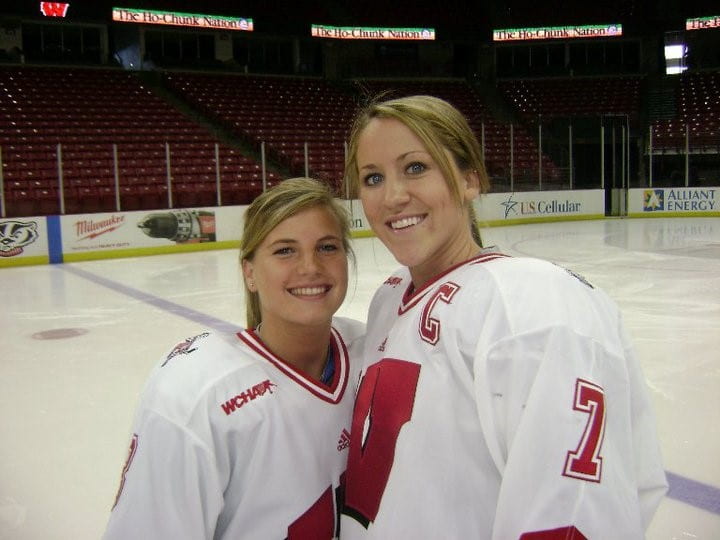
Geena Fennell (L) with Meghan Duggan during the 2010-2011 University of Wisconsin Hockey Season.


But when negotiations to advance women players’ rights began with USA Hockey, they didn’t make any progress. So when the 2017 World Championships were being planned in Plymouth, Michigan, the team used the opportunity to ensure their demands were met by announcing a boycott. They missed the entire pre-camp until their needs were met by USA Hockey.

The move worked. Finally, the two parties negotiated a four-year contract, which included full funding during Olympic and non-Olympic years.

Before the contract, all active players for the national team were being paid the same amount with a monthly stipend in order to train and prepare in between Olympic Games. The contract ensured this included benefits through the US Olympic Committee, better injury and maternity coverage through USA Hockey, and the creation of a women’s advisory committee that meets monthly to discuss improvements consisting of players, representatives from the NHL and USA Hockey. What an accomplishment!

The Professional Women’s Hockey Players Association

Another major change in women’s hockey came in 2019 when the USA hockey players, along with a legal team from Ballard Spahr, and various advisors, created the Professional Women’s Hockey Players Association.

Historically, between Olympic years, national team players participated in the Canadian Women’s Hockey League without compensation. However, in 2015, the formation of the National Women’s Hockey League ensured the athletes were paid to play for the first time.

The league’s long-term structure, however, was not sustainable enough with sponsors or support from the NHL, so the Professional Women’s Hockey Players Association formed with their own board, advisor team and support from big names in women’s sports, such as Billie Jean King.

The best players always compete in different tournaments throughout Canada and the US. The goals of the association are to not only grow the game, but to have a professional league ultimately backed by the NHL. As Kendall Coyne Schofield stated during our conversation, “The infrastructure of a successful league has been in place by the NHL for 100 years, they just need to make room for women to be a part of that, and we can’t do it without the league and player’s support.”

Women in Hockey: Behind the Scenes

Women are playing a major role on the administrative side of hockey, too, and some of that is happening right in our backyard within the Chicago Blackhawks organization. Meghan Hunter is one woman making a difference by running senior vice president/general manager’s Stan Bowman’s schedule, and handling so much behind the scenes to make day-to-day operations run smoothly. Her colleague Annie Camins, meanwhile, has put in 11 years building the BlackHawks Fan Development program to grow the game in our community. You may not recognize these names, but these women are growing the game in Illinois.

Both Hunter and Camins believe that now, more than ever, is a great time for women in sports. Hunter explains: “There has been a push in our organization as well as the NHL to expand upon diversity and inclusion, and women are starting to take on more roles than ever before.”

After speaking to these amazing women, I learned how change is happening for women athletes in the fight for equal rights. More women are taking on administrative roles and opening doors for other women to enter. However, there is still a lot of work to be done. The more we can support our fellow women in hockey—by following the team on social media, going to their tournaments and events and getting young girls and women involved in the sport to grow the game—the more we can continue to build on their foundation and improve the opportunities for women hockey players and professionals in the future.

Geena Fennell graduated from the University of Wisconsin-Madison with a bachelor’s degree in history. She works full-time as an account manager for a large staffing and recruiting company and is completing her MBA at the Kellstadt Graduate School of Business, with concentrations in leadership and change management, as well as sports management.

Originally posted on Inside Kellstadt.

Highlight Reel: My Week Behind the Scenes in Chicago Sports

By Larissa Gojdycz | Photos by Kathy Hillegonds and Randall Spriggs

When I first read about the “Behind the Scenes with Chicago Sports Organizations” course, the only thing I could think of was sign me up. Then I realized that the class was one week long, Monday through Friday, so would require me to take time off from work.

The class attends a Blackhawks game at the United Center. (Photo by Randall Spriggs)

Being employed full-time while attending the MBA program at the Kellstadt Graduate School of Business is not uncommon for many students. Balancing work with graduate school is not easy. But after thinking it over, and realizing I could complete an otherwise 10-week course in a one-week time frame, I knew it would be worth it.

The week-long course ended up offering so much more than what I had expected. It was jam-packed with events ranging from speaking to a panel of DePaul alumni who work in sports to watching the Blue Demons men’s basketball team beat Texas Tech in overtime. When coworkers questioned why I took time off from work to go to class, I questioned why they wouldn’t take the time for a class like this.

Here are some highlights from the week:

Meeting Chicago Sports Teams

Jacqui Lorio, director of Guest Services for the Chicago Bulls, speaks to the students. (Photo by Randall Spriggs)

Our class met and visited five major Chicago sports teams. That’s right, we went to the Bears, Blackhawks, Bulls, Cubs and White Sox offices and stadiums, where we met with the employees of each team and received tours of the facilities. One of my favorite tours was of the American Airlines 1914 Club at Wrigley Field, led by Cubs Senior Vice President of Sales & Marketing Colin Faulkner. A few years ago when the Cubs wanted to increase revenue without being able to add seats, they dug out the dirt from under the seats in the stadium and created three premier clubs. The 1914 Club was a sight to see. The Cubs designed the room to replicate the era of the 1910/1920s, with gold and sleek accents. The Chicago Cubs offers the 1914 Club to ticket holders in the section behind home plate, where they can access drinks and food and buy exclusive Cubs gear only available to that suite. It was amazing to see how a company was able to think out of the box to increase revenue without adding seats to a stadium.

Visiting Sports Agencies and Companies

Students visit the Chicago headquarters of rEvolution, a sports marketing and media agency. (Photo by Kathy Hillegonds)

Another component of the sports industry we learned about was sports agencies and companies. Our class visited three agencies that deal directly with sports teams or companies that have sports sponsorships and/or relationships, like Gatorade, which was one of the companies we visited. We got to see the behind-the-scenes of how these agencies execute marketing campaigns for brands that want a sports integration or experience. Our class ended the week with a brainstorming session with the agency 4FRONT, which gave us some hands-on experience with the work they do and some interesting insights on how they do it.

Networking

Whether it was with the sports teams, agencies, brands or even fellow students in the class, meeting and networking with people was a definite highlight of this course. Over the week we met with more than 70 professionals in the sports space and were able to talk one-on-one with whomever we wanted to. It was invaluable being able to connect and chat with everyone. At the end of the week we had a round-table discussion panel with DePaul alumni who currently work in sports: Kacie Dohrmann of Northwestern Athletics; Mike Gordon of Learfield/Northwestern Sports Properties; Nick Bennett of the Blackhawks and Tim Weaver of the Wolves. We also met with three Kellstadt Graduate School of Business alumni, who were once students in this course: Max McNutt of Marketing Werks, Roger Uy of DePaul Athletics, and Graeme Jones of 4Front.

On top of making connections with people during the site visits, I made many connections with students in the class. Many of us were in the same boat with our careers, so we were all very excited to be exposed to the number of people we got to meet as well as make connections among ourselves.

The class visits the White Sox at Guaranteed Rate Field. (Photo by Kathy Hillegonds)

These highlights are just a small peek into the amazing and productive week I had with the “Behind the Scenes with Chicago Sports Organizations” course with Andy Clark, director of the sports management program at the Driehaus College of Business. The days were filled to the brim and we were always on the go, but the experience is something that will stick with me for the rest of my MBA journey, as well as career.

Larissa Gojdycz graduated from Marist College in New York with a bachelor’s degree in advertising. She works full-time as a media manager for a large retail company and is pursuing her MBA, with a focus on entrepreneurship, at the Kellstadt Graduate School of Business. Originally from northern New Jersey, she is still adjusting to Chicago winters, even though she’s lived in Chicago for five years.

Originally posted on the Inside Kellstadt blog.

DePaul Students Discover the Power of Sports Business to Do Good

Students in the Introduction to Sports Management course, taught by Senior Instructor Andy Clark, pose for a photo before delivering presentations. | Photo courtesy of Gina Ciolli


By Gina Ciolli

​The world of sports has the ability to better a community through programs and initiatives that put wins and losses aside for a greater purpose. Families facing economic hardship during the holidays or local school kids who cannot afford lunch can have these weights lifted off them through the philanthropic services of the athletic icons in their city. These acts of service may seem to be fleeting, but the memory of them can last years afterwards.

These acts are what we were tasked to highlight in DePaul’s Driehaus College of Business Introduction to Sports Management course in the fall quarter.  Our student team project aimed at exploring corporate social responsibility (CSR) among a broad range of categories related to sports. The class was filled with passionate students eager to learn as budding professionals in the industry that we have been a part of as young fans.

Taught by Sports Management Program Director Andy Clark, the course featured guest lectures by leaders from different areas of the sports industry who offered insight into what they do and how we can get started in the business. The sports philanthropy student team project incorporated many of the concepts we learned throughout the quarter.

To launch the project, our class was introduced to Philanthropy Playmakers, which “advises athletes and sports organizations on how to leverage sports to accelerate community impact.” Philanthropy Playmakers co-founders Eric Shainock and Erica Prosser helped design our project and attended multiple class sessions throughout the quarter to consult and advise each team.

Students were arranged into seven teams that focused on athletes, teams, leagues, legacy events, esports, sports non-profits and brands. Throughout the quarter, each team conducted extensive research on their topics to understand CSR best practices in their discipline. Through interviews and research, each team developed innovative ideas to drive philanthropy in sports forward.  These insights helped us develop our own original CSR program. ​

The judging panel for the student sports philanthropy team project presentations (front row from the left): Tony Rokita, Erica Prosser and Eric Shainock. | Photo by Kathy Hillegonds

The project culminated with final presentations to a panel comprised of Prosser, Shainock and DePaul alumnus Tony Rokita, director of alumni relations for the Chicago Bulls. In addition to providing feedback to each team, Rokita shared a story about Bulls legend Michael Jordan meeting with a Make-A-Wish Foundation-supported child with cancer before a game. The conversation the two had was a brief moment in which the child sat up in his bed and exhibited a new found energy he had lost during his battle with cancer. His family was greatly affected by this moment, as was Rokita who says it has stuck with him in the more than 20 years since and showed him the impact sports can have during difficult times.

Our team’s topic was legacy events. From Super Bowls to All-Star Games to the Olympics, these events evoke immense passion and civic pride. It is an honor for a city to host one of these events whether it is their first or their sixth time, but with hosting such a large event comes a greater responsibility to leave a lasting legacy for the surrounding community. My team focused on the 2028 Olympic Games in Los Angeles and the many events leading up to the games. Our focus was on sustainable efforts to reduce a negative impact on the environment through implementing green practices and ways to benefit the homeless population in the city. One of our original ideas for the 2028 Games was to partner with Tesla to offer a sustainable transportation system in the city. This topic offered a unique approach to the project as legacy events can hold a larger impact for the athletes and fans.

Each project succeeded in finding what makes sports so special as an impactful tool for change in society and it was interesting to see shifts in perspective with every new topic. Following the presentations, Eric Shainock shared: “Erica and I were thrilled to work with DePaul to develop a sports philanthropy project for the class. After external interviews and extensive research, the students delivered final presentations that exceeded our expectations. They really took ownership of the project and provided insights that could very well be implemented within the sports philanthropy industry right now. We were proud to be and expose future sports business leaders to an emerging and critically important sector of the sports industry.”

People love sports for the camaraderie, the excitement and just for the plain fun of it. The world of sports has a unique ability to benefit communities, raise money for organizations, bring attention to important issues and provide opportunities for people in ways that other industries cannot do, all while fans cheer on their favorite teams.

Records will always be broken and teams will always chase championships, but sports philanthropy continues to develop as an important “teammate” to the efforts of those in the industry to help others. This project established the great importance of CSR in sports and helped us, as budding professionals, to understand the multi-dimensional industry beyond statistics and league standings.

Gina Ciolli is a sports communications major at DePaul.

Originally published on DePaul’s Driehaus College of Business & Kellstadt Graduate School of Business website.

DePaul Students Test Chicago Cubs Customer Service

Taught by Andy Clark, the five-week hospitality leadership course partnered with the Chicago Cubs Service Excellence Program to improve the sports organization’s customer service.


By Robin Florzak

A DePaul University business course gave students an opportunity to help the Chicago Cubs organization hit a home run for fan services this summer.

Students enrolled in the five-week hospitality leadership course partnered with the Chicago Cubs Service Excellence Program to become “secret shoppers” who tested the quality of all aspects of the sports organization’s customer service. They called and messaged Cubs representatives to see how well they answered common fan questions, evaluated Wrigley Field tours, and assessed events at Gallagher Way, a ballpark-adjacent green space where the Cubs host concerts, farmers markets, yoga classes and other activities. Students also spent an afternoon at the Cubs’ Wrigleyville corporate offices answering fan mail, coordinating season ticket holder correspondence and assembling premier tickets sales materials.

“The class gives our students a chance to gain real-world consulting experience,” says Andy Clark, director of the sports management program at the Driehaus College of Business, who taught the course. “They are learning firsthand how customer service, customer insights and business analytics come together to affect sales and fan engagement. Brad Nagel, assistant director of talent acquisition, and the rest of the Cubs organization have been terrific partners for this project.”

At the end of the five-week course, students presented their confidential analyses of service delivery outcomes, trends and recommendations to Cubs directors in ticket sales, marketing, business strategy and human resources.

“One of the main things I’ve learned from this class is how to work together in a large group to understand each other’s strengths and organize the project so that each student is able to have a meaningful contribution based on his or her skills and own experiences in a consulting project situation,” says Scott Baird, an MBA student who took the class. “Working in groups to accomplish a task is an essential skill in any career.”

His classmate, senior Mary Rossi, agreed that the course provided students skills “that we can take back to our careers, not only in sports, but in general business.”

“This was definitely one of the highlights of my university career,” Rossi adds. “Not many other university students can say they were able to work with the Chicago Cubs on a project for several weeks for a class. Great insights, experiences and a fantastic behind-the-scenes look at the business side of one of the greatest MLB teams.”

Originally published on DePaul’s Driehaus College of Business & Kellstadt Graduate School of Business website.

DePaul Students Pitch Marketing Ideas for McDonald’s All American Games

By Robin Florzak

As a Braham, Minn. high school senior in 2013, DePaul Blue Demons Women’s senior guard Rebekah Dahlman was one of 24 elite players from across the country selected to play basketball in the McDonald’s All American Games. Dahlman didn’t imagine then that a few years later, she and four DePaul University graduate business school classmates would be presenting a marketing plan at McDonald’s new West Loop offices for this national high school hoops all-star event.

Jesse Larios presents to McDonald’s marketing and communications managers. | Photo by Kathy Hillegonds

“As a student athlete myself and a McDonald’s All American alumna, I never knew how much went into all the planning, marketing and advertising for this event,” says Dahlman, who is studying in the Master’s in Marketing program at the Kellstadt Graduate School of Business. “I thought we (the student teams) all brought great ideas, and, from their (McDonald’s) feedback, it seemed like they loved all of our ideas and would consider using them at the future games.”

In March, McDonald’s marketing managers heard presentations from four Kellstadt student teams as well as six teams of undergraduate DePaul business majors who proposed strategies for driving awareness of the McDonald’s All American Games on a national level and increasing tickets sales in the host city. The project was part of the Sports Sponsorship Marketing course taught by Andy Clark, director of the Sports Management Program at DePaul’s Driehaus College of Business.

Rebekah Dalman | Photo by Steve Woltman

All 10 of the student teams presented to an impressive group of McDonald’s marketing and communications managers led by McDonald’s Head of Sports Alliances John Lewicki, along with recent DePaul graduates Rachel Rossner (BUS ’16) and Claribel Diaz (BUS ’17), who, as students, took Clark’s course. Joining the presentations evaluation team were representatives from McDonald’s agencies, DDB, Golin, KemperLesnik, Narrative Group and Content Collective.

“The feedback from the panel for all 10 teams was outstanding,” Clark says. “John Lewicki developed this experiential learning project specifically for our Sports Sponsorship Marketing classes. Prior to the final presentations John came to DePaul two separate weeks to work with the students. We can’t thank John enough for his time and expertise during the six-week project.”

The project “not only prepared me for pursuing my dreams in marketing but also it gave me a taste of what really goes into the process of working on a huge event like the McDonald’s All American Games,” Dahlman says. “I appreciate all that goes into this having a successful turnout and an exciting week.”

Originally published on the Driehaus College of Business & Kellstadt Graduate School of Business website.

Business Students Develop Sponsorship Proposals for Special Olympics

By Jaclyn Lansbery

Students collaborated with Special Olympics on a quarter-long project as part of a sports sponsorship marketing course.


Geena Fennell’s first encounter with Special Olympics was in seventh grade, when she volunteered for the summer games in Michigan. She recalls helping a runner, who became startled after the gun went off at the starting line, by walking with him until he reached the end of the race.

Now a part-time MBA student at the Kellstadt Graduate School of Business at DePaul University, Fennell had the opportunity to work directly with Special Olympics, the world’s largest sports organization for people with intellectual disabilities, during a winter quarter sports sponsorship marketing course taught by Andy Clark, faculty director of the DePaul’s Sports Management program.

John Murray, CEO of Arena Partners, worked closely with students throughout the quarter.

Students collaborated with Arena Partners, a sponsorship strategy firm working with Special Olympics, on a quarter-long project supporting the Special Olympics 50thAnniversary celebration. The event will take place this July in Chicago, where the first Special Olympics international competition was held. The class project culminated with presentations by teams of students pitching sponsorship ideas for major Chicago companies, including Aramark, Abbott Labs, Boeing, Discover Card, McDonalds, Tyson Foods and Ulta.

John Murray, CEO of Arena Partners, also provided guidance to the students’ projects throughout the quarter and gave feedback after each final presentation.

“Professor Clark’s sports sponsorship marketing course had a key role in the development efforts for Special Olympics’ 50th Anniversary,” Murray says. “We were impressed by the professionalism and quality demonstrated by the students and their work.”

Throughout the course, which was open to both graduate and undergraduate students, representatives from Special Olympics and Arena Partners brainstormed with students to develop attendance-driving ideas and sponsorship strategies, and spoke about the impact of the organization.

“For us as students, it was an exciting project because it’s something that’s happening now, and Arena Partners stresses that these ideas are being put into place.” says Fennell, who was a member of the Wisconsin 2011 NCAA Championship Women’s Hockey team. “It’s pretty cool that we’re able to make an impact and they might use some of the ideas to go talk with other companies.”

Real-world Impact

Students drew inspiration for their work on the project from the leadership roles that two DePaul alumnae have held at Special Olympics

Illinois Supreme Court Justice Anne Burke (SNL ’76, DHL ’05) co-founded Special Olympics, which hosted its first international game in 1968 at Soldier Field and has now branched into a global community serving five million athletes in 172 countries.

DePaul University Trustee Karen Atwood (MBA ‘82) serves as chair of the Special Olympics of Illinois board.

Among the class speakers was Karen Atwood (MBA ‘82), who chairs the Special Olympics of Illinois board and also is a member of DePaul’s Board of Trustees. During her talk, Atwood shared her life and career journey, including her former role as president of Blue Cross and Blue Shield of Illinois where she first learned about Special Olympics.

“I always think when you can see the impact that your actions, your ideas and your support bring to the larger community, the more it reinforces why the Vincentian values are so important,” she says. “When I showed the class how we had synthesized their crowd-building and volunteer activation ideas into a document that was shared with those working on the 50th Anniversary celebration, I could see how pleased they were that they had made a difference. Their motivation for the project grew further.”

Classes that have a “real world” component are beneficial to both the student and the organization, Clark says. “Working directly with actual companies sharpens the students’ focus on the subject matter and creates a heightened sense of urgency for the project.”

In fall 2017, Clark also taught an event sales, service and promotion course where students worked directly with the Chicago Cubs Service Excellence Program to evaluate how millennials respond to customer service.

“In the context of this project, the students’ final presentations are more than a class exercise,” says Clark who has more than 25 years of experience working in sports marketing and has held positions with Edelman and Cramer-Krasselt. “By presenting a plan and budget to Arena Partners CEO John Murray, the students benefit from feedback and critiques related to the project’s objectives that go far beyond the grade for the class.”

Originally posted on the Driehaus College of Business & Kellstadt Graduate School of Business website.