
by Meredith Carroll | Jun 24, 2024 | Student Stories
Two international students share their takes on Chicago, on finding their path and on the importance of mentorship
By Meredith Carroll
Serigne Dramé
What do I think of DePaul in a sentence? A school that gives you the tools and the flexibility to succeed.
Where is home for you, and how did you choose DePaul?
I’m from Senegal.

Photo provided by Serigne Dramé
The “me” from 2019, when I applied to college, had a much different vision for my future. I wanted to be a game designer. And I applied to DePaul because it’s known for that. I was accepted to a number of different places — some in the U.S., some in France. What made the difference was that my sister was in Chicago and going to IIT.
Speaking of Chicago — what’s your experience been like in the city?
There’s this weird cycle. The winter gets so bad that you start thinking, “maybe Florida sounds nice.” But then the summer happens. And you think, “this is so nice I’m going to give it another try.”
I’ve taken bachata classes. For a time, I did pro wrestling. That’s the other thing about Chicago. It gives you so many possibilities. It’s international to an extent. And that’s the big draw.
The one thing I’ve noticed is that most people who live here think you’re from Chicago. That can be a good thing and a bad thing. The good thing: it’s easy to be integrated. The bad thing: people assume you know things — slang, expressions, politics — you don’t.
How did you go from studying game design to the degree you’ll be graduating with: a double major in Management Information Systems and International Business?
My first year was 2020-21. It was all remote. At the end of that year, I realized that I wanted to do more. MIS stood out because it offers this blend of business and technology.
MIS is one of those majors that you don’t hear a lot about. But what I like with it was that the core classes were business classes and the electives were technical — data analytics, databases, cybersecurity.
It’s more applied. And there’s the versatility. Looking back, if I had been a Computer Science student, I don’t think I would have gotten my M&A internship. I was able to take applied finance classes, and that allowed me to do well in the technical interviews. The big advantage is the flexibility.
Searching for jobs and internships as an international student can be especially challenging. What has the experience been like for you?
I did two internships during my time at DePaul, both of them at EY. In September, I applied for a job at Deloitte. I heard back from them in January. And I got it. I feel lucky. There was a lot of hard work involved; but still, I feel lucky. The market is hard. And most employers don’t sponsor visas. There’s a lot of pressure; if you don’t find a job quickly, you’ll have to return to your home country.
The school of business has been really helpful for two reasons. I mentioned the flexibility aspect. But there’s also the fact that we’re in Chicago. Chicago is a big market; there’s a lot of professionals. Even beyond the career fairs, everyone has connections. You can just ask faculty after class, and they’ll connect you to someone.
How would you sum up DePaul in a sentence?
DePaul is really, for me, an example of it is what you make of it. If you leverage the Career Center, the knowledge that you get from classes, the connections, the career fairs, the software resources, you can go far.
What do I think of DePaul in a sentence? A school that gives you the tools and the flexibility to succeed.
Suchita Farkiwala
I have come to see the world from a bigger, broader perspective. Every day, there are things that I am learning, things that I am unlearning and things that I am relearning.
Where is home for you, and what has your experience at DePaul been like?
I come from Ahmedabad in Gujarat, India. Currently, I commute from Morton Grove, where I live with my family.
DePaul is in the heart of Chicago. So you get the best of the big city experience. The diversity at DePaul is incredible. People come here from all over the world.

Photo provided by Suchita Farkiwala
What were your career goals when you arrived at DePaul, and how has that changed?
I am an accounting undergrad. When I started, I simply wanted to make money, get a stable job, and make my family proud. Basically, I wanted to live the American Dream. But DePaul changed the way I see my life, what I want to do in my life.
Now, I want to give back to the community. I want to do something that impacts the lives of others. My professors inspired me to follow their path. One day, I want to come back to DePaul as a professor and help others so that they can be another success story from DePaul.
Mentorship has been a central part of your experience at DePaul. Tell us more about that!
Faculty at DePaul have been incredibly supportive of me, even before I started my journey as an accounting major here. Within the accounting department, Kent Klaus and Margaret Tower have been especially helpful. They pushed me to apply for on-campus jobs. They encouraged me to pursue an internship at Deloitte – and I got it.
Ever since I got that internship, I’ve tried to help other students so that they can get this chance too. I sit down with them: help them to get better grades in accounting class, get their resume done, practice interviewing with them.
Outside of that, I have been active with International Student and Scholar Services as a mentor. Mentorship is a gift that keeps giving. It’s made me grow so much as a person, as a professional. I’ve met so many new international students and learned so much about their cultures. It’s given me the chance to be the reason someone feels seen, heard, cared for, and valued.
What’s your favorite advice to give your mentees?
I tell them: Any time that you feel that your question is too dumb to ask, ask me. At DePaul, I have never found a person who said no to me when I needed help. Regardless of whether my question was academic, professional, or just about learning the basic ways to survive in Chicago.
Miracles don’t happen in a snap. Don’t rush. Give yourself some time to experience the magic of DePaul.
Finally: Don’t think that you are different. Think that you are unique. It will change the way you think about yourself. At DePaul, we celebrate that. There’s no pressure to fit in. So be yourself.
What’s some memorable advice you have received?
My accounting professors and a mentor from Deloitte both told me: Use your career as a canvas. Ask for what you want. Do whatever makes you happy. Accounting is very, very tough. It’s a tough major; it’s a tougher profession. So never feel like you can’t do this. Take the initiative.
My father always tells me: The only way to grow is to help other people grow. The only way to heal is to help other people. So don’t come back home with a trophy unless you are already committed to paying it back to those who made it happen.
How has DePaul changed you?
My professors have been here for me, my friends have been here for me. My supervisors and colleagues have been incredibly supportive.
My mentors always tell me, “don’t expect less for yourself.” They made me believe that.
I have come to see the world from a bigger, broader perspective. Every day, there are things that I am learning, things that I am unlearning and things that I am relearning.
My success is a shared success of my family and my DePaul community.
Now, DePaul feels like a home away from home.
by Meredith Carroll | Jun 24, 2024 | Faculty Focus
By Meredith Carroll

Photo by Kathy Hillegonds
The first thing that Julia Ariel-Rohr (BUS ’12) wants the Driehaus community to know is how thrilled she is to be back at DePaul.
“I wake up every day feeling so grateful to be here,” she said.
Ariel-Rohr doesn’t just bring extensive experience with financial reporting and auditing to her new role at Driehaus. She also brings her perspective as a DePaul graduate.
Her path began in the accountancy program at Driehaus, where Ariel-Rohr encountered two young, female accountancy professors: Kelly Richmond Pope and Wendy Heltzer.
“They opened my eyes to the fact that someone like me could be a professor,” Ariel-Rohr said. “I felt that sense of belonging at DePaul. When you’re at that age, that’s a hard thing to find.”
After graduation, she secured her first two jobs in the field with the help of DePaul connections. When she decided to apply to PhD programs, it was a DePaul alumnus — her audit partner, Scott Steffens (BUS ’89) — who advocated for her to have flexibility to fly out for interviews during industry’s busy season.
Returning to teach at Driehaus was meaningful for Ariel-Rohr because of her personal connection to DePaul. But the job was also attractive because of how the research being done at Driehaus aligns with her own.
“In the accounting world, I would say probably about 20% of us are behavioral researchers,” said Ariel-Rohr. “One of the things that attracted me to DePaul was that we have such a strong behavioral group.”
When it comes to behavioral auditing research, DePaul consistently places in the top 15 schools nationwide, according to rankings kept by BYU.
As the field faces an impending shortage of Certified Public Accountants, figuring out how to attract and retain talent will be more important than ever, said Ariel-Rohr.
“When you think about preventing fraud, and financial statement misconduct in public companies, it affects all of us who have retirement plans,” she said. “That is going to be a huge issue in the next 10 to 20 years.”
That’s where Ariel-Rohr’s research comes in. Her latest research examines how insights from behavioral research can increase retention and belonging in workplaces.
“The prior literature shows that a sense of belonging [at work] comes from small acts, from day-to-day experiences,” she said. Her research takes these insights a step further by looking at how factors such as a sense of belonging, a culture that encourages authenticity, and values-based mentorship can increase employee retention.
The impacts of such work can be significant, she said — not just for employee retention but also for audit quality.
“In audit, we’re really concerned about low-level staff speaking out if they have a concern about something,” she said. “That sense of belonging and that sense of psychological safety can also influence their ability to speak out, which can have downstream impacts on audit quality.”
“This [research] can improve our students’ lives as they are trying to work in this really intense field,” she concluded. “And it could potentially improve audit quality as well.”
Joining Practicality with Purpose at DePaul
For Ariel-Rohr, her research and teaching are deeply connected.
“It’s one of my goals to recruit people into a major that they might not have otherwise considered a fit for them,” she said. “One thing I love about teaching accounting is that I view this degree as a really good tool for social mobility. If you don’t have a safety net to fall back on, an accounting degree will give that to you.”
The ability to be financially independent was a big part of what drew her to accounting as a student at Driehaus. So, too, was the flexibility offered by a stable, in-demand profession.
“I often tell my students that if they have dreams of traveling and seeing the world, an accounting degree is a great way to do that,” she said. “I left my first job after a few years and went to travel around the world for a few months. Because I knew that as soon as I got back, I’d be able to find a job.”
Before she enrolled at DePaul as an undergraduate, Ariel-Rohr spent a year living outside of Sao Paulo, Brazil. Now that she’s back at Driehaus, she’s eager to start getting involved with study abroad opportunities.
When Ariel-Rohr reflects on her career, her research, and her teaching, one theme rises above the rest: purpose.
“I know for myself and for a lot of my students, we’re looking for purpose in our jobs,” she said. “Accounting isn’t automatically the first career path students think of when they think about finding purpose in their jobs. But there is definitely a place for it. Every single organization needs an accountant. So if students are into nonprofits, which is what I was passionate about, you can be a nonprofit auditor. If they really like sports: the Cubs has auditors, a CFO, controllers. There’s a place no matter what your interests are.”
As for Ariel-Rohr, she’s found a place, and a purpose, for herself at DePaul.
“Everybody thinks their student population is special,” she reflected. “But I truly believe that being in the city of Chicago with such a diverse group of hardworking students coming from all different backgrounds makes DePaul different.”
“It’s a dream,” she said, “to be back.”
by Meredith Carroll | Jun 24, 2024 | Faculty Focus
By Jamie Merchant

Photo provided by James Bort
“We always study entrepreneurs, you know? Looking at the employees of a startup is a little different.”
James Bort has a slightly unconventional outlook for a scholar of modern business.
“My dad was a line-level employee in a factory, and he had a very adversarial relationship with work,” he candidly shared in a recent interview. “So, when I started working for people who ran their own companies, that completely changed my view of what the world could be.”
An early exposure to the unique culture of startups — their collegial atmosphere, the give-and-take between employees and leadership — offered Bort a different model for understanding the workplace in the 21st century. That experience piqued an intellectual interest that motivates his research to this day.
Bort’s curiosity eventually led him to the academic study of startups, particularly the startup workforce. However, he points to the value of his on-the-ground experiences as an early-stage employee, entrepreneur, and musician for prompting the questions he asks about the modern workplace. Prior to joining academia, he was a software engineer, information technology manager, and restaurant owner in a career that spanned multiple industries. He even launched his own independent record label during his time in graduate school at Syracuse University.
It’s a research agenda shaped by art, science, and his personal history.
“Research is ultimately me-search,” Bort said, echoing the well-known statement of his graduate advisor, Johan Wicklund. “It’s a journey of self-discovery.”
Over the course of these experiences, the new assistant professor in the Driehaus College of Business became fascinated by the mutual lines of influence that run between startups and their employees: a startup is uniquely open to employee input and guidance, while at the same time it can serve as a springboard into future opportunities as the venture grows and evolves.
“There is this sort of bidirectional influence where you’re drawn to the startup because there’s endless opportunity, but then it influences you, in the sense that your career trajectory can be accelerated in some phenomenal ways.”
Storytelling as an Engine of Entrepreneurship
Having worked on both sides of the equation as a startup employee and an entrepreneur, Bort’s scholarly attention has recently been drawn to the role of narrative: to the power of the stories we tell to shape our perception of the world around us. For aspiring entrepreneurs, these stories can have an outsized impact on their career trajectories — or, as in his own case, on one’s research interests.
Bort’s background as a business owner indelibly informs his research in the field of entrepreneurship. Not only talking the talk, but also walking the walk is crucial, in his view.
“To have had that experience of like: it’s Wednesday, payroll hits tomorrow, and I’m still two grand shy. I have a day to figure this out — that hustle changes you as a human, and it certainly informs your approach to research.”
Our life experiences provide the raw material for the stories we tell ourselves. These, in turn, shape our perceptions of our own possibilities. For example, in a recent article published in The Journal of Business Research, Bort and his co-author, Henrick Totterman, found that “underdog” entrepreneurs — entrepreneurs starting from disadvantaged personal or economic circumstances — often have higher growth aspirations, precisely because of the adversities they have had to overcome.
But this work is not only relevant for specialists in the field. Bort’s students find it fascinating.
“The students love it,” he said. “I have units on neurodiversity and entrepreneurship and how we can flip these things into a strength. And [the students] really react strongly to it, because it’s becoming less stigmatized. It’s OK if you are depressed and going through it, because this is what the human experience is!
“The classic idea of the lone wolf entrepreneur, where everything’s perfect and you just see the success story — that’s not how it is. Really successful people struggle too.” It’s an empowering message for students crafting their own narratives as they set out on their post-college careers.
Bort is still getting to know the students and culture of the university. But he’s quickly getting a sense for what makes DePaul special. Teaching in the part-time MBA program has been particularly rewarding.
“They’re really, naturally curious and motivated. It’s one of the best groups I’ve had. When I did my MBA, it was part time as well, and it was really hard. So I try to construct the course to be like the course I would have wanted to take when I was in my MBA program!”
by Meredith Carroll | Nov 14, 2023 | Notes from the Dean
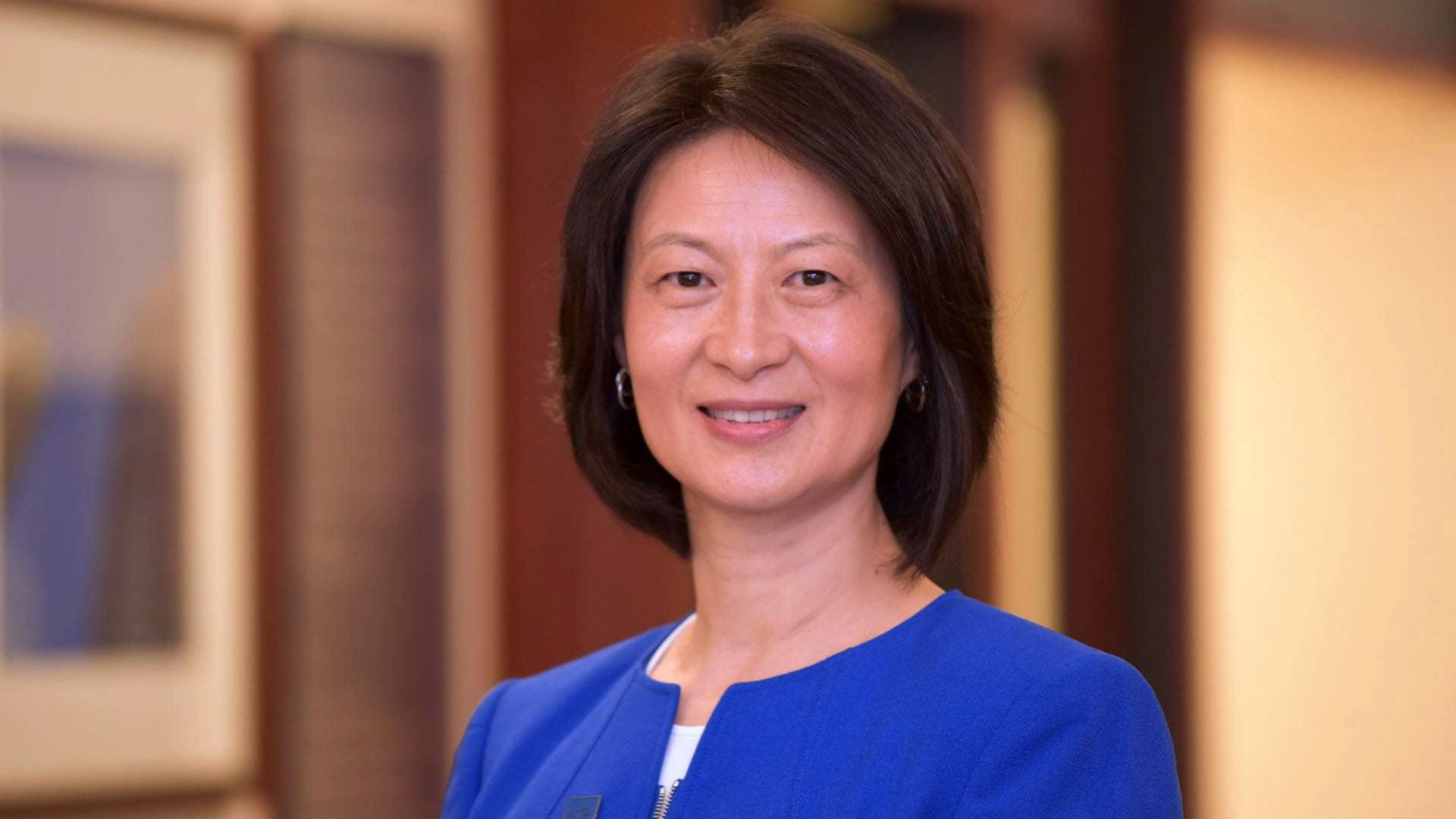
Dean Sulin Ba
Driehaus entrepreneurship program ranked #10 in the nation; curricular innovations honored; and more good news from the Loop.
As the fall quarter draws to a close, we have much to celebrate here at DePaul’s Driehaus College of Business.
Two of our very own initiatives, the Driehaus Cup pitch competition and the Coleman Entrepreneurship Center, received top honors from our peers.
As you learned in the last issue of the Business Exchange, the Driehaus Cup is an engaging “Shark Tank”-style pitch competition that gives Business 101 students the chance to explore entrepreneurship early in their careers. In October, the Driehaus Cup earned the annual Curricular Innovation award from the MidAmerican Business Deans Association.
We already knew this year would be a special one for the Coleman Entrepreneurship Center (CEC). A hub of entrepreneurial community in Chicago, the center celebrated its 20th anniversary this October. Just before that gathering, we received fantastic news. At the Global Consortium of Entrepreneurship Centers annual conference (which boasted more than 700 attendees representing 300 universities from across 19 countries!), the Consortium honored our very own CEC with its Nasdaq Center of Entrepreneurial Excellence award. This award is given annually to just one university from among those with an enrollment of 5,000 or more students. It is regarded as the highest honor a university entrepreneurship center can achieve.
In no small part due to the success of these initiatives, our undergraduate entrepreneurship program was ranked 10th in the nation by the Princeton Review. I am so proud of this achievement. It attests to a culture of innovation at Driehaus. And this culture isn’t just created and sustained by our students, faculty and staff. It is also a product of our alumni and community supporters. Everyone I have spoken to involved in entrepreneurship at Driehaus can tell you this: Supporting entrepreneurs is a team effort. Our entrepreneurship program is only as strong as our connections. And those connections are strong indeed.
From entrepreneurship to sports marketing and management, this issue of Business Exchange is all about connections. You’ll read about the Coleman Center’s role as a hub of entrepreneurial community. You’ll hear how that community has supported Driehaus junior Gretchen Shuler as she launches a coffee business designed to empower foster youth. You’ll drop in on Director of Sports Business Programs Andy Clark’s (MBA ’87) “master classes” in networking. And you’ll hear about an exciting new program launched by Richard Rocco, associate professor of marketing, that promises to build bridges between research and industry.
In all four stories, you’ll find alumni and supporters of Driehaus and the Kellstadt Graduate School of Business. Some are mentioned by name. Others play equally crucial roles just off the page as mentors, as panelists and guest speakers, as pitch competition judges, as bridge-builders and change-makers.
If you are looking for ways to get involved yourself, the CEC would be delighted to hear from you. I would be too. Regardless, I am confident that you will find the stories of our students and faculty just as inspiring as I do.
by Meredith Carroll | Nov 14, 2023 | Features
From mentorship to venture funds, learn how the Coleman Entrepreneurship Center has served as a hub of entrepreneurial community in Chicago.
Over the 20-year history of the Coleman Entrepreneurship Center (CEC), one definition of entrepreneurship has risen above the rest.
Entrepreneurship at its best is about meeting a need in your community.
As CEC Executive Director Bruce Leech (MBA ’81) puts it: “I want to honor the student who walks in here and wants to open a grocery store on the South Side of Chicago because there isn’t one — a business that will create jobs and sustain their family.”
It’s a definition of entrepreneurship that reflects what’s distinctive about DePaul University: A commitment to its Catholic, Vincentian mission of making education accessible to all. And promoting peaceful, just and equitable solutions to challenges faced by communities in Chicago and around the world.
The center’s work has garnered recognition. At this year’s Global Consortium of Entrepreneurship Centers conference, which brought together 700 participants from 300 universities across 19 countries, the CEC won the Nasdaq Center of Entrepreneurial Excellence award. The award is the highest honor a university entrepreneurship center can achieve.
And when the Princeton Review released their rankings of university entrepreneurship programs for 2024? The undergraduate program at Driehaus ranked 10th in the nation.
Local solutions to local needs: A look back
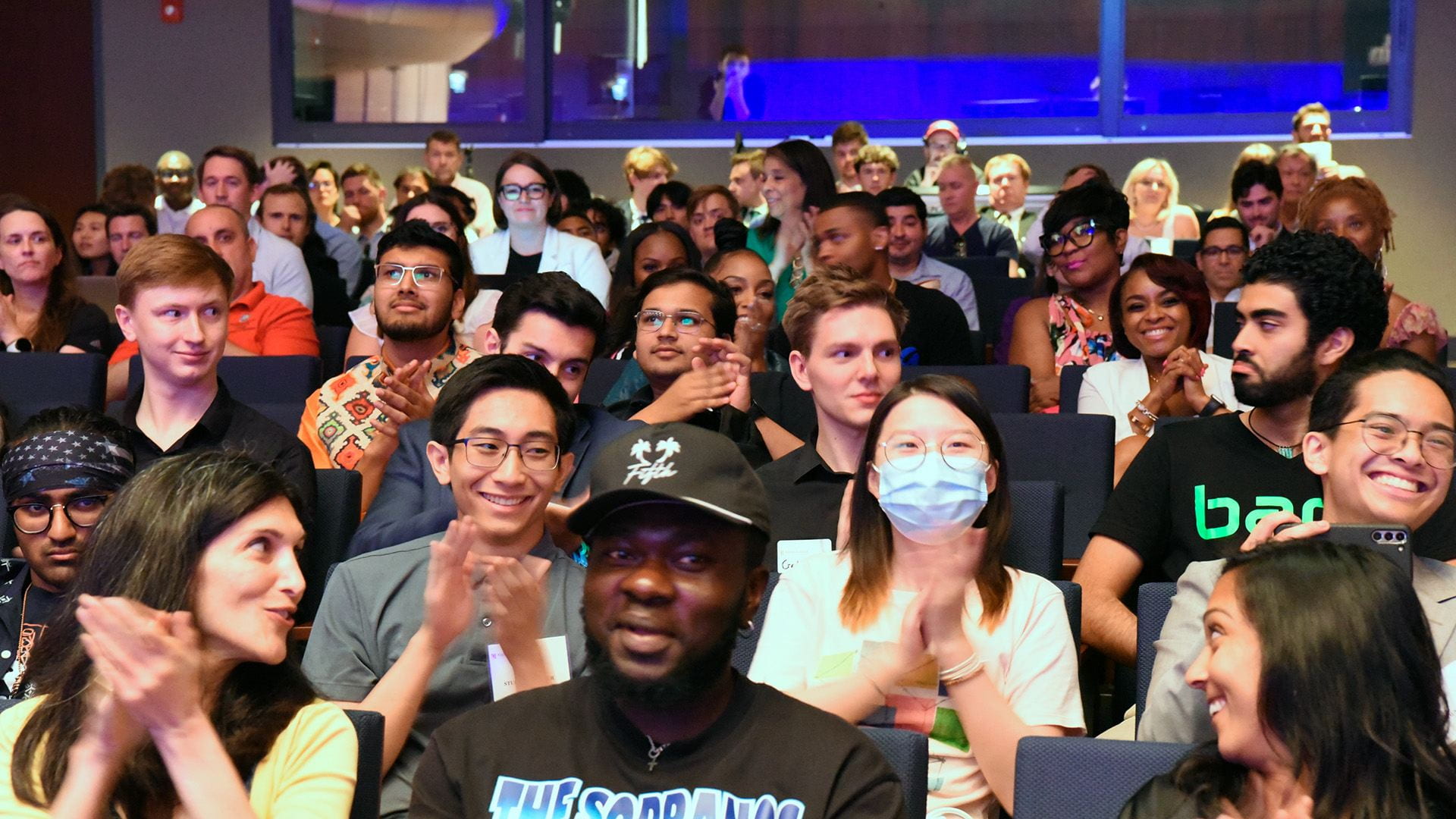
Students in the audience for University Pitch Madness, an entrepreneurship competition hosted by CEC that brings together student teams from universities across the Midwest.
The CEC was founded in 2003. Its history stretches back decades before that.
Harold Welsch (BUS ’66, MBA ’68) was the founding chair of the center. Before entrepreneurship was a buzzword, Welsch taught students much like the ones Leech interacts with today: first-generation college students and others who are invested in using business to better their communities.
In the ’90s, Welsch’s focus on empowering small-business owners coincided with rising interest in entrepreneurship.
“Harold was kind of the godfather of entrepreneurship,” Leech says. “The people I look up to now looked up to him. He saw a need” to equip students to “help their family businesses, help their communities.”
Welsch’s work resonated with Mike Hennessy, CEO of the Coleman Foundation from 1995 to 2020 and a champion of entrepreneurship in Chicago. In 2003, with Hennessy’s support and a generous gift from the foundation, the CEC was born.
In 2023, the center’s mission — entrepreneurship as a way of meeting a local need — has proven as relevant as ever. If anything has changed, Leech says, it’s the scope. Students aren’t just bringing an entrepreneurial spirit back to communities in Chicago. From Honduras to India, they’re also making a difference around the world.
A mindset, a skill set, an ecosystem: The CEC’s impact today
A mindset: Cultivating wonder
For Leech, teaching entrepreneurship starts with recognizing that entrepreneurship “isn’t a subject. It’s a skill set.”
It’s also a mindset: a way of engaging with your work regardless of your role.
“One of the best traits you can have as an entrepreneur is a sense of curiosity,” Leech says. “I relate it back to a childlike sense of wonder. At some point, as we get older, we get blinders on. We don’t question anything anymore.”
In teaching entrepreneurship, Leech says, his task is to help students cultivate curiosity.
“Even if you go to work for a big company, don’t just sit there and do your job,” he advises students. “Ask yourself: If this were my place, how would I do it differently?”
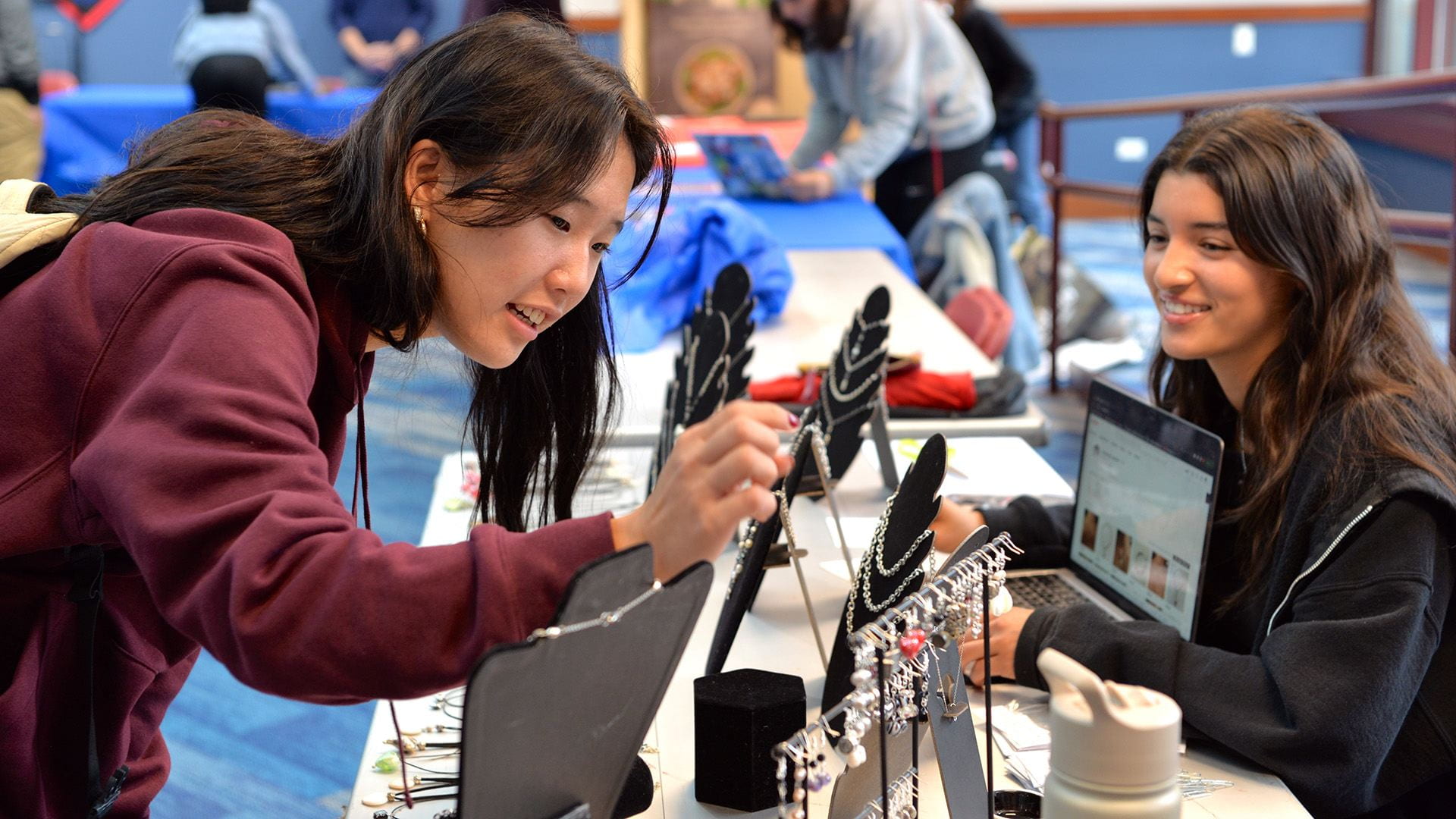
A DePaul student admires jewelry at the Coleman Center’s Welcome Back Market.
A skill set: Internships with an impact
Cultivating an entrepreneurial mindset can benefit all students — not just those who see themselves as entrepreneurs.
Director of Emerging Company Programs Emily Doyle runs the center’s internship program. After the COVID-19 pandemic limited students’ access to work experience, Doyle says, “the need for internships skyrocketed.”
Fast-forward to this year, when the CEC received more than 120 applications for internships. This summer, 36 students participated in paid internships — many funded directly by donors — tailored to their interests and goals. Many of these students came from fields other than entrepreneurship, and many are international students.
Interning in an entrepreneurial environment gives students “unparalleled access to creativity, innovation and problem-solving,” Doyle says.
For many students, an internship is their first exposure to a work environment where there are opportunities to define your role for yourself. It can be daunting and rewarding in equal measure, Doyle says.
Companies benefit too. Interns have taken on significant projects, such as designing logos or launching branding initiatives.
“Students get to make an impact within just a few months,” Doyle says, “in a way that’s not possible at other kinds of companies.”
Put another way, the internship program not only prepares students for the workforce. It also helps students launch their careers while they’re still at DePaul.
An ecosystem: Creating a hub of innovation and connection
Indeed, according to Program Manager Kathia Hernandez (BUS ’22), many students are already engaged in entrepreneurship. They just don’t see it that way.
“Having a side hustle, making art, selling jewelry — all of that is entrepreneurship,” she says. She encourages students to visit the center even if they don’t have specific questions. “Just come in and tell us what you’re doing. We’ll figure it out together.”
This philosophy pervades the center’s work. It applies equally to the center’s role as a hub of entrepreneurial community in Chicago.
The CEC has long supported women in entrepreneurship. The Women in Entrepreneurship Institute — launched in 2018 and now housed in the CEC — supports and empowers women founders through all stages of their entrepreneurial journeys.
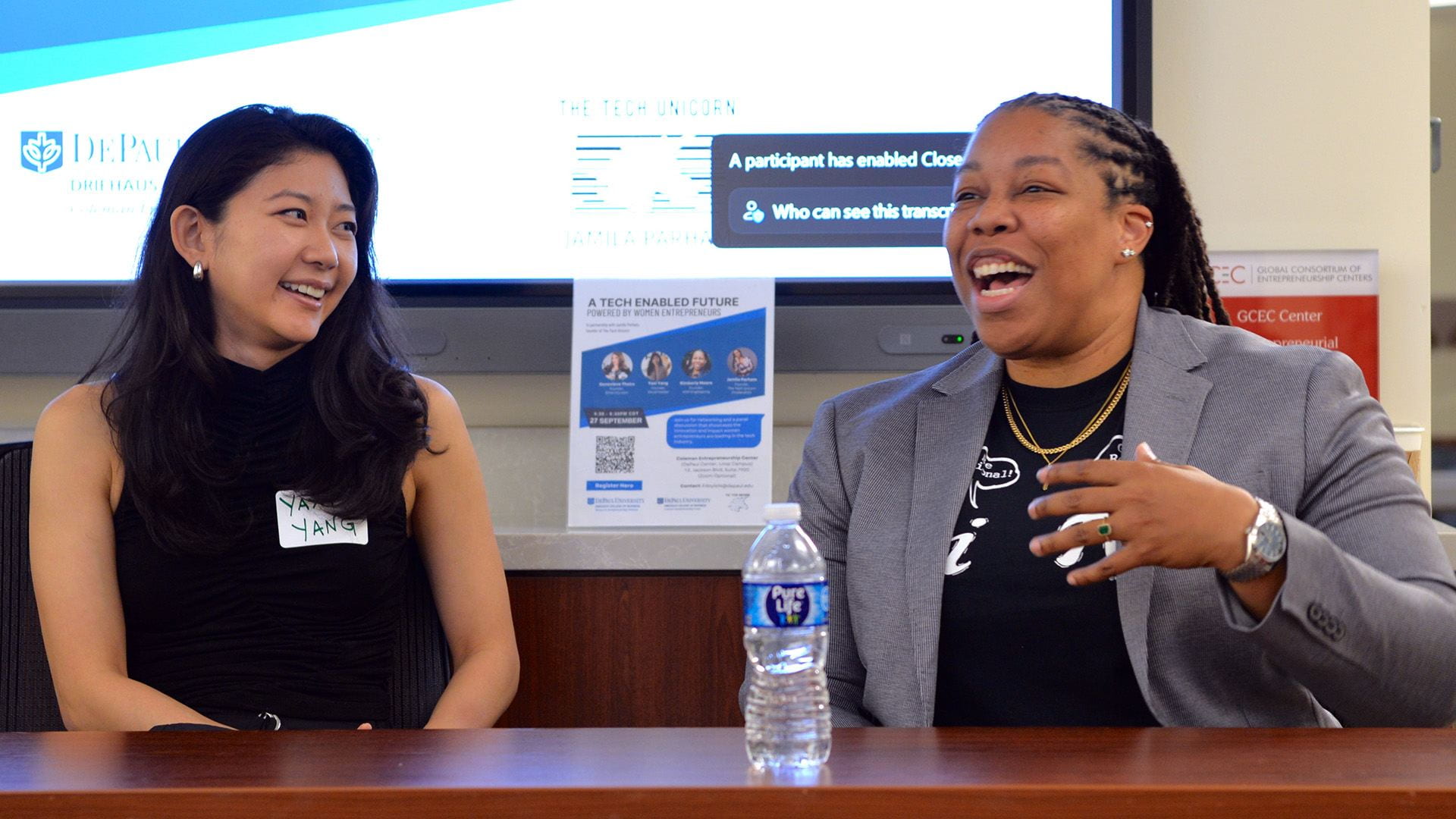
Yaxi Yang and Kimberly Moore speak at A Tech-Enabled Future Powered by Women Entrepreneurs, a panel discussion hosted by the Women in Entrepreneurship Institute in partnership with the Tech Unicorn.
Additionally, the CEC welcomes community members to participate in much of its programming. The Social Impact Incubator takes this community involvement to the next level.
Now entering its third year, the incubator brings together a small cohort of students, alumni and community members — all of them building businesses with a social impact.
For eight weeks, participants get a crash course in how to launch a business. In the process, they create community that can be hard to find elsewhere.
“The common mission of building a business really brings the group together,” says Coleman Chair of Entrepreneurship Maija Renko, who created the program alongside Leech. “You can’t tell who’s a student, who’s a community member. The learning goes in all directions.”
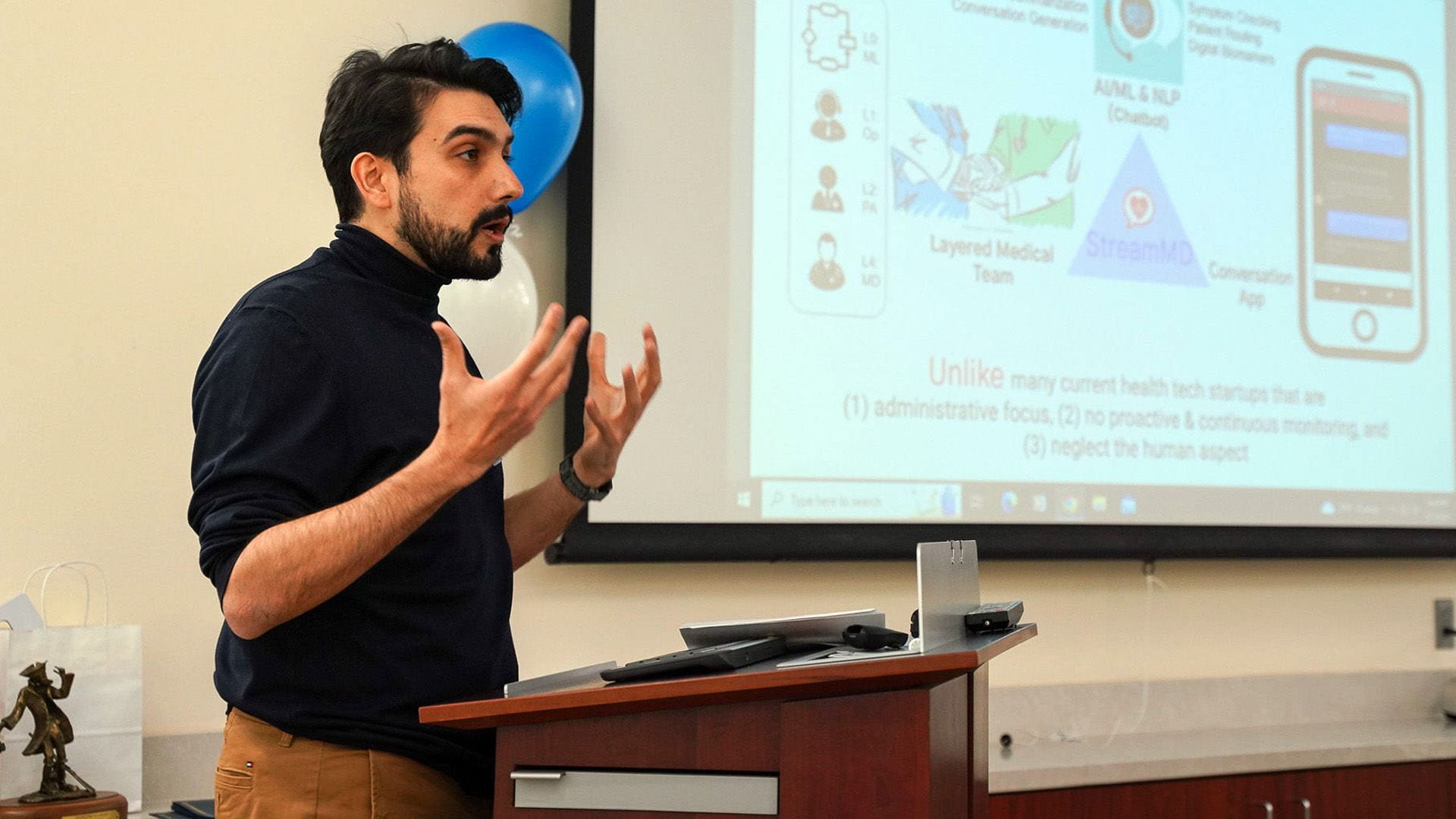
Sina Ansari, assistant professor of management and entrepreneurship at DePaul, pitches his business as a participant in the 2023 Social Impact Incubator.
Many participants of the incubator have gone on to host DePaul student interns. Others have offered up their expertise as mentors. The incubator and other community-focused programs feed into Chicago’s entrepreneurial ecosystem. Students, alumni and local communities all benefit.
Evolving in community: Looking ahead to the future
As the center looks ahead to its next 20 years, entrepreneurship will continue to evolve. The CEC’s role in Chicago’s entrepreneurial ecosystem will continue to evolve along with it.
The newly created Halperin Emerging Company Fund — which provides capital for DePaul to make equity investments in startups founded by DePaul students, alumni and select community entrepreneurs — is one indication of what that evolution might look like.
As an evergreen venture fund launched with a $3 million gift, the Halperin Fund gives students the chance to get firsthand experience with the venture-funding process. Two students sit on the fund’s board. Students participate in early rounds of the vetting process, hearing founders’ pitches and offering feedback.
In this way, education goes hand in hand with giving back.
“Even if it’s a no” on funding, says Doyle, who administers the program, “we can leverage our DePaul network to help businesses continue to grow. We can offer that partnership; we can offer that community.”
It’s a community that will go with students wherever their journey takes them next — from neighborhoods in Chicago to cities around the world.
For Leech, it all comes back to the CEC’s mission.
“Let’s honor and serve the students we’ve got here,” he says. “If I can help them in any way, that’s what I want to do.”
RELATED