by jlansber | Apr 23, 2020 | Faculty Focus
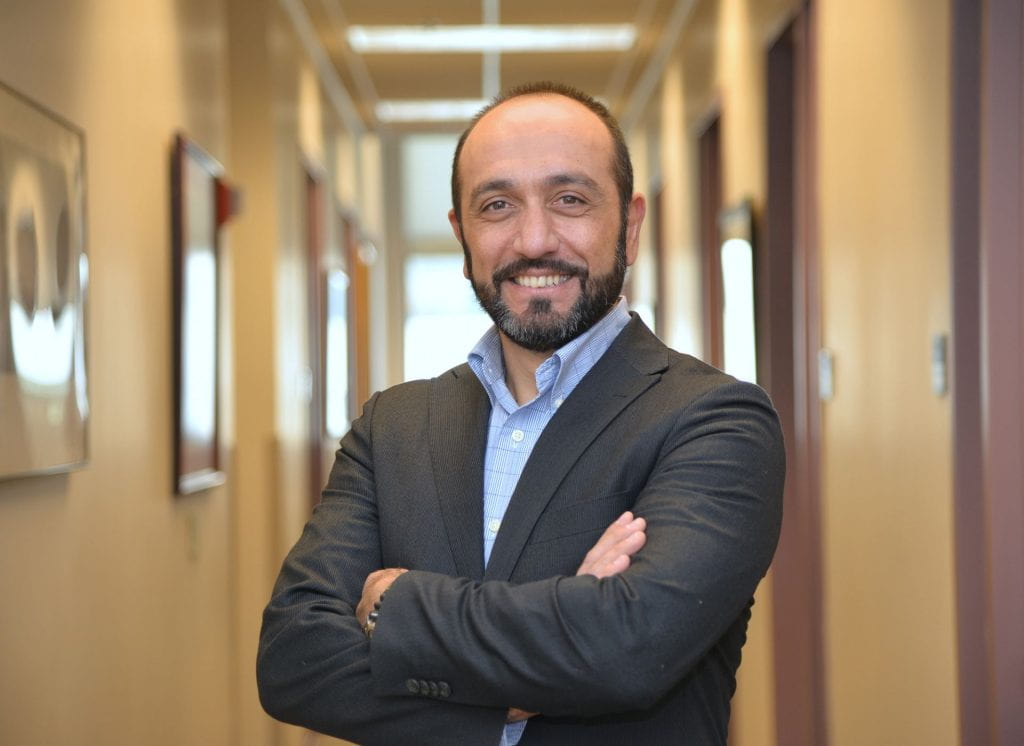
Professor of Management Nezih Altay
Professor of Management Nezih Altay still remembers the pivotal event 20 years ago that led him to focus his expertise on humanitarian supply chain.
It was Aug. 17, 1999, five days before he was supposed to marry his fiancée, Ozge Guney, in Turkey’s capital of Istanbul. Altay and Ozge had traveled to their home country to celebrate their wedding with family. At 3 a.m., he began to feel the ground shaking. In less than a minute, a 7.2-magnitude earthquake hit just outside of Istanbul, killing more than 17,000 people.
Altay and his family managed to escape to a nearby park, where they waited for shelter and relief. It took the government three days to assemble an emergency management operations center. “It was a game-changing event,” Altay says. The earthquake, which left thousands of locals without homes, led Altay to learn more about the supply chain of disaster management.
Today, Altay is lauded for being one of the first U.S. academics to recognize the importance of applying supply chain theory and research to disaster relief. He has been named a Fulbright Scholar and will research the logistics of aid delivery in conflict zones for six months next year as the visiting Fulbright-Hanken Distinguished Chair in Business and Economics at the Hanken School of Economics in Helsinki, Finland. In 2019, the American Logistics Aid Network, an association that provides supply chain assistance to disaster relief organizations, recognized Altay’s work with its first Research and Academic Contributions Award.
Supply chain management typically refers to the flows of goods and services in private businesses. However, Altay says the only difference between supply chains in the business sector and the humanitarian sector is what he calls the objective function.
“The objective function in the corporate world is to minimize cost,” he explains. “It could be to maximize revenue as well. In humanitarian supply chains, the goal is to minimize human suffering or minimize response time. Usually, you cannot minimize response time and cost at the same time. It’s very hard.”
After returning from Turkey, Altay and his wife attempted to resume their lives as PhD students at Texas A&M University. Bothered by the Turkish government’s lack of response to the earthquake, they raised $15,000 in disaster aid funds and sent it to several nonprofit organizations. Altay also began reading about disaster relief management while completing his dissertation.
“I thought, as a PhD student in operations management, there must be a better way of dealing with these events,” he says. “Because ultimately, disaster operations is a process.”
In humanitarian supply chains, the goal is to minimize human suffering or minimize response time. Usually, you cannot minimize response time and cost at the same time. It’s very hard.”
— Nezih Altay, professor of management
After completing his dissertation, Altay began teaching at the University of Richmond, in Virginia’s capital. To get a better understanding of disaster relief management, he attended workshops organized by the Federal Emergency Management Agency and met the former director of emergency management for Virginia, Walter G. Green. Altay and Green eventually co-authored a 2006 paper that assessed the literature in disaster relief and supply chain, which triggered academics’ interest in the topic. Researchers also began to notice the importance of humanitarian supply chains as more catastrophic events, such as Hurricane Katrina, took place. Altay’s paper became one of the most cited in its field.
At DePaul, Altay’s research helped create the graduate course Humanitarian Supply Chains. The course is offered as an elective to DePaul business students and is a core course in the Refugee and Forced Migration Studies master’s program in DePaul’s College of Liberal Arts and Social Sciences.
While supply chain students may want to work for private organizations, Altay says the humanitarian and business sectors have a lot in common. Given current issues that may influence supply chains, including pandemics, climate change and international political tensions, operations management, like a humanitarian supply chain, no longer follows a predictable pattern.
“We’ve learned new things in humanitarian supply chain research, and now we’re applying those lessons to commercial supply chain research,” Altay says. “So it’s come full circle.”
Altay continues to delve into unique aspects of supply chains and humanitarian issues. He is currently working on an academic paper that examines the relationship between companies’ stock value and reports of those companies’ allegedly engaging in human trafficking. Another research paper he is proud of examines information hubs in the humanitarian community. He presented this paper at a conference organized by the United Nations Office for the Coordination of Humanitarian Affairs.
“After I presented my research, a couple of people from the World Food Program (a humanitarian organization that addresses famine and hunger worldwide) came and told me, ‘This is what we’re looking for,’” Altay says. “That’s why I feel that my research has made an impact—people care about it and are using it.”
Learn more about Nezih Altay by viewing this DePaul Distinctions video.
By Jaclyn Lansbery | Photo by Kathy Hillegonds

by jlansber | Apr 23, 2020 | Notes from the Dean
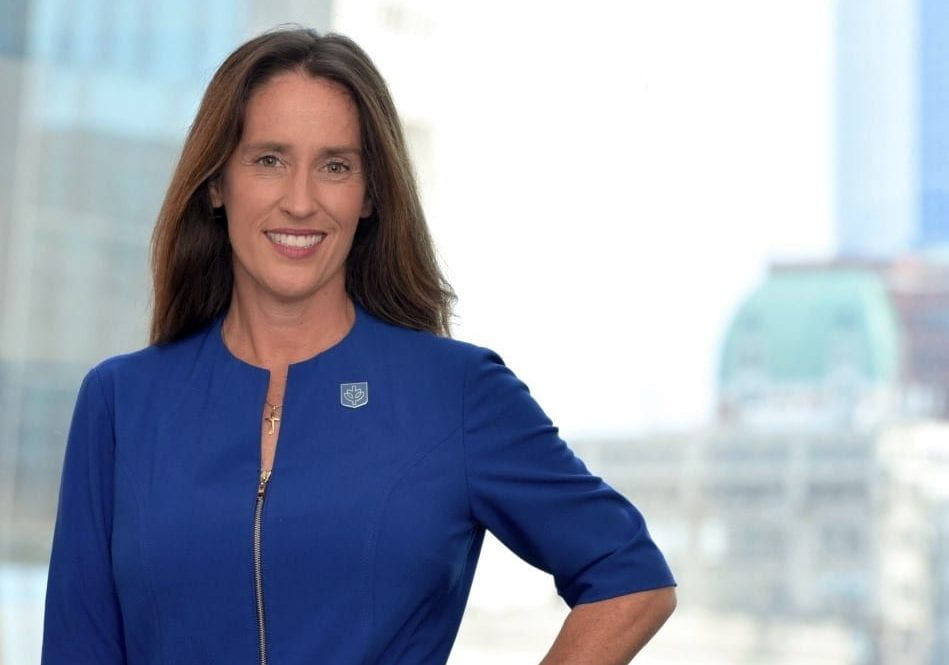
Dean Misty Johanson | Photo by Kathy Hillegonds
This spring brings change to our business college, both unexpected and planned.
As we were finishing this issue of Business Exchange, COVID-19 became a pandemic that compelled DePaul to move all spring quarter courses online and all student services to remote delivery for everyone’s safety. I am proud of how quickly our teleworking business faculty and staff united to make this happen, ensuring that our students could continue their education and receive much-needed support during uncertain times.
Our college is also undergoing a change in leadership. After much thought, I decided in January to pursue a new direction in my professional life and step down as dean at the end of my term on June 30. I have served for nine years as associate dean and dean of the Driehaus College of Business and now plan to return as a senior faculty member at the School of Hospitality Leadership in July 2021 after a one-year leave. I am confident our college will be in good hands under the leadership of Interim Dean Thomas Donley. Tom has distinguished himself in a series of college and university leadership roles during his 30-year DePaul career. I invite you to read more about Tom in College News.
I am honored to have had the opportunity to lead this great college and proud of all we have accomplished. During my three years as dean, I have had the pleasure of collaborating with our faculty, staff, students, alumni, advisory council members and benefactors to better position our college to withstand the challenges we face in the current higher education environment. Together we developed an ambitious, five-year strategic plan that sets our college’s direction through 2024.
One of the plan’s priorities is to expand our distinctive student career development and mentoring programs that produce graduates who are sought after in the job market. The strategy centers on mobilizing our college’s strong business community relationships and large alumni network to connect students to internships that lead to careers after graduation. Our feature story introduces you to alumni who have found their career paths
through these initiatives. These efforts are more important than ever as the Class of 2020 enters a job market and economy altered by the unprecedented impact of COVID-19.
I am honored to have had the opportunity to lead this great college and proud of all we have accomplished.
Our strategic plan also emphasizes the creation of new market-driven degree programs that meet the changing needs of working professionals and the organizations that hire and promote them. In College News, we share more about our new graduate business degrees scheduled to debut this fall.
As we pursue our strategic plan goals, we remain committed to providing students with a high-quality business education that connects theory to practice. The most recent Princeton Review college rankings highlight the results of this commitment. Once again both our undergraduate and graduate entrepreneurship programs placed in the nation’s top 25. Our reputation is also bolstered by faculty members who are producing notable scholarship that addresses real-world issues. Two of them, Nezih Altay and Alyssa Westring, are featured in this issue.
I am grateful for your contributions that helped our college exceed its fundraising goals during my tenure. I thank you for supporting the Blue Demon Challenge on Jan. 23, which allowed our college to surpass its one-day fundraising challenges and DePaul to raise more than $2 million—twice the university’s goal—during this day of giving. I also thank our generous alumni donors and families who have contributed significant gifts to support centers and student success programs at our college. This support is essential for our mission to continue.
I am so thankful to have had a chance to work with you to make our college and the DePaul mission stronger, and I will continue to support our future success in my new role.

Misty Johanson
Dean
Driehaus College of Business

by jlansber | Apr 23, 2020 | Features

Paloma Mendoza (BUS ’20) (in beige sweater) got her foot in the door of advertising firm FCB during a class visit. (Photo courtesy Andy Clark)
DePaul helps business alumni stay career competitive
Like many Class of 2020 graduates, Michael J. Smith had to pivot his career plans last spring because of the pandemic-driven economic downturn. Smith was looking forward to joining KPMG as a tax data and analytics associate in June. But on the eve of earning his master’s in business analytics, Smith received word that KPMG was delaying start dates for new hires until January 2021.
Despite the setback, Smith remained confident because he knew he had a strong ally to help him navigate his next career step: DePaul. DePaul business students and alumni “have access to a tremendous amount of resources” that support career searches and advancement, says Smith, resources that include personalized career coaching.
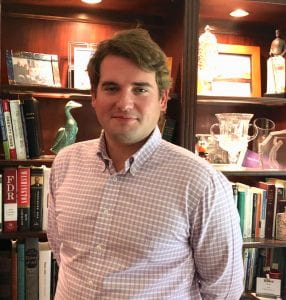
Michael J. Smith (BUS MS ’20) received personalized career coaching to land an
analytics position in the spring.
Smith asked the Kellstadt Career Management Center (CMC), which helped him land the position with KPMG, for assistance in finding an interim data analytics role until his new start date. A CMC career coach helped Smith “identify the right opportunities for me and network with a purpose,” he says. “I broke my strategy into three steps: create an elevator pitch, analyze the market and identify my target companies and audiences.” Smith identified industries that would need data analysts, even in a tough economy. With election season in full swing, he added political parties to the list.
The strategy paid off. Smith was hired as deputy state data director for the Republican Party of Wisconsin in July. The position was a perfect fit for his need to deepen his data analytics experience before beginning his assignment at KPMG, which remains committed to bringing him on board in 2021. “I feel extremely honored and valued during such uncertain times.”
Since the pandemic hit in March, the CMC, which supports graduate business students and alumni, and the DePaul Career Center, which serves undergraduate business students and alumni, have been expanding their resources to help Blue Demons stay competitive in a dramatically altered labor market. The centers offer alumni remote career coaching, webinars on job search strategies and online networking, as well as a wealth of web-based resources, including Handshake, a comprehensive career services portal that provides job and internship listings, as well as information about career events.
One of the DePaul Career Center’s newest initiatives is a job search club for alumni and new graduates “to talk about challenges people are facing and share goals and questions,” says Karyn McCoy, the center’s assistant vice president. “It’s a way to let people know they are not alone.” McCoy also recommends the CMC’s new skills labs created to help graduates think about upskilling, as well as the Alumni Sharing Knowledge (ASK) Network as a nexus for alumni to share career insights.

Paloma Mendoza (BUS ’20) | Photo by Kathy Hillegonds
At the business college, faculty, departments and centers are stepping up to connect students and new graduates to career leads through an extensive network of alumni and industry connections. Certificate and graduate degree programs are also available for alumni to build career resilience, especially if they have been out of school for a while. “We encourage alumni to return to refresh their skills and see our college as a resource for growth throughout their professional life,” says Interim Business Dean Thomas Donley.
Business faculty—and their contacts in Chicago’s business world—offer a fruitful networking resource. Paloma Mendoza (BUS ’20) got her foot in the door at the global advertising firm Foote, Cone & Belding (FCB) in July with the help of Andy Clark (MBA ’87), the sports business program director.
Mendoza became interested in advertising agency work as a student in Clark’s sports sponsorship marketing class, which visited FCB’s Chicago office to discuss Super Bowl ads with executives last winter. In the spring, when she learned that FCB was offering virtual account management internships, she applied. “Mentioning Professor Clark’s name and my class experience visiting FCB definitely helped,” she says. Mendoza landed the coveted internship, which pairs her with a FCB account director mentor and puts her into consideration for future job openings.
“She did a fantastic job of following up with FCB and secured a very tough-to-get internship, especially in this environment,” Clark says. “I think Paloma’s story represents the very best of what a DePaul education offers.”
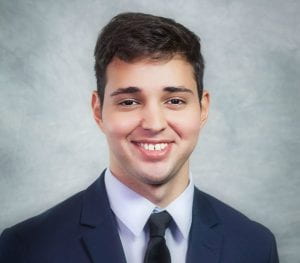
Alumnus Omar Ortiz prepared for a promotion by earning a DePaul marketing strategy certificate.
For alumni who are midcareer professionals, DePaul certificates and graduate degrees have become an attractive option to advance their careers in a competitive market. “At least 35% to 40% of our students are DePaul alumni or family members of alumni,” says Jurate Murray (MBA ’02), associate director of the Kellstadt Marketing Center, which offers a wide range of advertising and marketing certificate programs for professionals to refresh their skills.
Omar Ortiz (BUS ’17), marketing manager for Neighborhoods.com, completed the center’s content marketing strategy certificate program online in March to prepare for a recent promotion. “I thought it’d be a great idea to further sharpen my skills and solidify myself as an expert,” he says.
Upskilling for Andrew Catanese (BUS ’14), club and theatre ticketing manager for C3 Presents, meant enrolling in DePaul’s MBA in hospitality program this fall. Offered entirely online, the program gives Catanese the flexibility to continue working remotely from Austin, Texas, for C3, a nationwide concert promoter. “I’ve been out of school six years, and I think that’s a big gap as far as new techniques,” says Catanese, who hopes to run his own music venue in the future. “I am excited to further my education in the hospitality program.”
By Robin Florzak
by jlansber | Apr 23, 2020 | College News
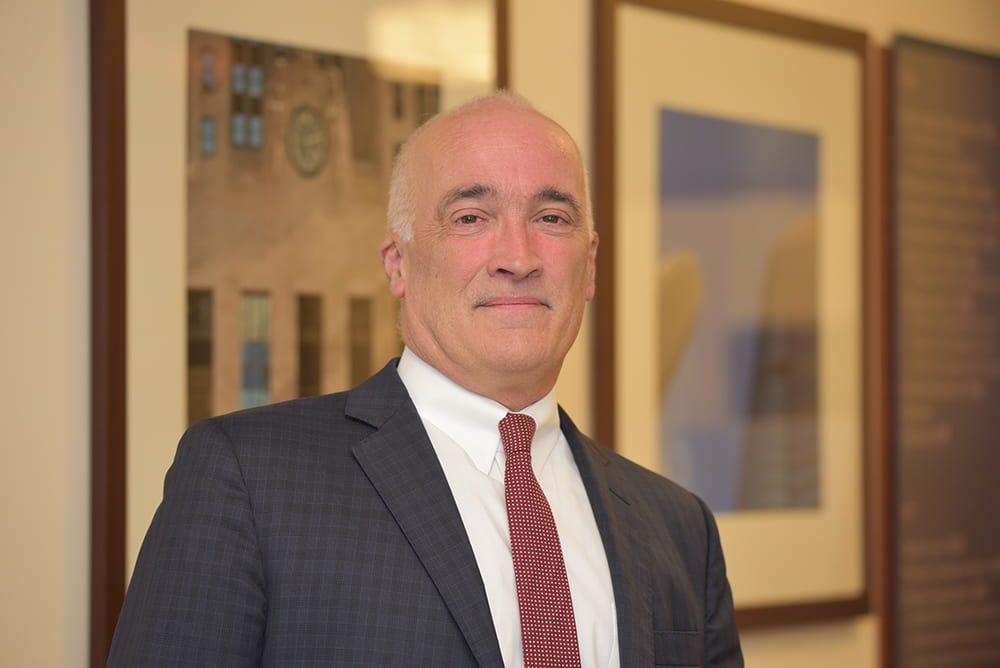
Incoming Interim Dean Thomas Donley | Photo by Kathy Hillegonds
DePaul University Interim Provost Salma Ghanem has named Thomas Donley Interim Dean for the College of Business, effective July 1.
Prior to his appointment, Donley, a professor of economics, held a series of administrative roles in which he helped shape the business college’s academic programs and operations,
as well as DePaul’s faculty governance. He will succeed Misty Johanson, who steps down June 30 to return to the School of Hospitality Leadership as a senior faculty member after a year’s leave.
“In his 30 years at DePaul, Tom has consistently demonstrated dedication to delivering an excellent education to our students,” Ghanem says. “From his leadership roles on Faculty Council to his international business expertise, Tom will be an effective advocate for continuing the business college’s success during this time of transition.”
As an associate dean for Driehaus since 2018, Donley oversees the college’s academic operations and manages its international program strategy, which includes graduate business programs in Bahrain and more than a dozen international business study abroad seminars annually. In his previous role as special assistant to the dean, he assessed academic unit performance to position the college for success.
“As interim dean I plan to focus my leadership on developing new market-driven programs and technology-enhanced course delivery modes that meet the needs of today’s students,” Donley says. “I also look forward to leading our college’s efforts to be reaccredited by the Association to Advance Collegiate Schools of Business.”
Born and raised on the South Side of Chicago, Donley joined DePaul’s faculty in 1990 and was promoted to professor of economics in 2002. He served from 2007 to 2016 as chair of the Department of Economics, where he established the Master of Science in Economics & Policy Analysis and its innovative fellowship program in Washington, D.C. DePaul presented Donley with its Spirit of DePaul Award in 2015.
As interim dean I plan to focus my leadership on developing new market-driven programs and technology-enhanced course delivery modes that meet the needs of today’s students.”
Donley served as president of the DePaul Faculty Council from 2004 to 2006. In this role, he updated the council’s faculty representation model and initiated a revision of the Faculty Handbook.
Donley’s research expertise is in applied microeconomics and econometrics, with a focus on labor markets and wage inequality. He teaches courses in microeconomics, macroeconomics and public economics, and has received college teaching excellence awards.
He earned a PhD and Master of Science in Economics from the University of Wisconsin, Madison, where his dissertation examined family income inequality. Donley also holds a master’s degree in economics from the University of Illinois at Chicago and a bachelor’s degree in economics from the University of Illinois, Urbana-Champaign.
“As associate dean overseeing academic operations, Tom has done an excellent job of guiding our college department leadership,” Johanson says. “I am confident that under his leadership, the college will advance in the achievement of its strategic goals.” The Office of the Provost expects the dean search for the Driehaus College of Business to begin in the 2020-21 academic year.

by jlansber | Apr 23, 2020 | College News
Kellstadt is revising its MBA program and developing new MBA concentrations that are expected to be offered this fall.
Decision-making in all industries is increasingly data-driven, creating more career opportunities for business graduates with analytical skills.
To prepare professionals to take advantage of these opportunities, the Kellstadt Graduate School of Business has revised its MBA program for this fall and is introducing new programs that emphasize analytics.
“The revised MBA curriculum has a greater focus on data analytics and innovation in business, and it is designed to be completed in 18 months for most students,” says Robert S. Rubin, associate dean for graduate and professional education programs at DePaul’s business school. “All courses in the program have been updated to ensure relevancy and promote learning of technology-based tools.”
A new MBA concentration, the MBA in Business Analytics, is also being offered this fall. It will equip students with advanced skills for analyzing business data to identify meaningful trends and recommend actions to capitalize on these trends. “These in-demand skills can be applied to positions across business functions, including those in operations, finance, management and marketing,” Rubin says.
Kellstadt also is developing an MBA in Healthcare Analytics, which it plans to add to the curricula soon. This concentration will equip students with the ability to analyze and act on data in the fast-growing health care industry, Rubin says. “Students in this program will learn how to use data to determine how business, health and public policy interact and what implications this has for health care organizations.”
All courses in the revised MBA program are being updated to ensure relevancy and promote learning of technology-based tools.”
— Robert S. Rubin, associate dean for graduate and professional education programs
Another degree that will debut this fall is the Online Executive Master of Science in Human Resources. “Human resources is another field growing in stature as the job market compels organizations to find highly skilled HR leaders who can execute effective strategies for talent development in changing times,” Rubin says. “We’ve designed our executive master’s degree program in collaboration with human resource industry experts to prepare professionals for these opportunities.”
The Executive MS in Human Resources targets professionals who have at least seven years of experience. Classes will be offered online accompanied by three in-person sessions that allow students to network with classmates, professors and industry leaders. Students can complete the program in 15 months.
For more information about these programs, contact the Kellstadt Graduate School of Business: (312) 362-8810, kgsb@depaul.edu, kellstadt.depaul.edu