by jlansber | Sep 30, 2015 | Scholarly Pursuits
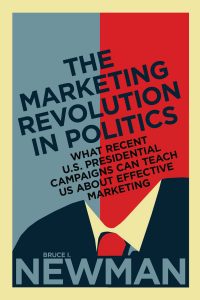 Sophisticated data analysis and creative thinking are essential for designing a successful marketing campaign today, no matter if the goal is to elect a president, sell a product or raise funds for a nonprofit. Marketing Professor Bruce Newman explores these ideas in his new book,“The Marketing Revolution in Politics: What Recent U.S. Presidential Campaigns Can Teach Us about Effective Marketing” (Rotman-University of Toronto Press), which is scheduled for release in January.
The book offers seven lessons that marketers in any industry can learn from recent U.S. presidential campaigns, focusing primarily on what Newman calls the “Obama Model,” the groundbreaking marketing strategies that Barack Obama’s marketing team used to win the 2008 and 2012 presidential elections. Newman also ties the lessons to innovative marketing methods used by organizations and leaders outside of politics, including Disney, Google, IBM, Procter & Gamble and even the pope.
“Political campaigns at the presidential level in the United States have become full-blown marketing campaigns,” observes Newman, the founding editor of the Journal of Political Marketing. “They are raising the bar on the use of the standard marketing techniques by incorporating technological advances in big data, customer analytics, microtargeting and social media. The innovative use of these techniques is so creative that it establishes a blueprint for profit and nonprofit organizations to follow.”
The Obama campaign revolutionized marketing, Newman explains, by basing all its strategies on measurable information, including more than 1,000 variables on the attitudes and behaviors of millions of voters. “Through complex analysis of this data and statistical modeling, the campaign was able to identify what message and narrative would resonate with a particular target market.”
Beyond the data-centered decision-making, Newman’s book underscores the importance of drawing creative ideas from diverse sources to develop a winning marketing formula, as the Obama campaign team did by bringing together experts in analytics, polling, fundraising, branding, advertising, customer relations and crisis management from the for-profit and nonprofit worlds.
“It is incumbent on CEOs to reach out to experts who understand the integrative nature of marketing in all fields, and not to be afraid to experiment with new strategies and tactics,” Newman says, adding that these innovations also “serve as a foundation from which to establish innovative MBA programs that educate our students and future business leaders on cutting-edge marketing practices in an effort to prepare them to compete in an increasingly more complex, interconnected world.”
Lack of Self-Awareness at Work Hurts Team Performance
 Self-assessment tests are a mainstay of corporate training and development programs that seek to make employees more aware of their strengths and weaknesses on the job. But when you rely on employees to judge their own abilities, are the results accurate?
To find out, Associate Professor of Management Erich Dierdorff and Management Professor Robert Rubin collected data from work teams and leaders who participated in a business simulation in a Fortune 10 company’s executive development program. The research revealed gaps between how workers perceive their own contributions to team goals and how their teammates assess them. More strikingly, teams with a significant number of members who overrated the value of their contributions reduced team success by half.
“With no external data, the results of self-knowledge assessments are presumed to be accurate, when instead they may reinforce inaccurate perceptions of ourselves,” Dierdorff and Rubin wrote in a Harvard Business Review article about their findings. “The net result can be harmful to development and performance and, as we observed, the effectiveness of teams.”
To address the issue, Dierdorff and Rubin recommend that managers tie self-awareness tools to performance. “Use external benchmarks: measure how someone’s self-view compares to others’ views and measure how assessments directly relate to outcomes, like increased learning and job performance,” they suggest. Managers also should clearly communicate why accurate self-awareness about one’s capabilities is relevant, and follow-up with self-development training that closes the “knowing-doing gap.”
Award-Winning Research Sheds Light on Shareholder Activism

Assistant Professor of Finance Jason Sturgess
Assistant Professor of Finance Jason Sturgess’s paper “The Role of Institutional Investors in Voting: Evidence from the Securities Lending Market” won the Global Challenge Award for Innovation in Corporate Governance sponsored by BlackRock Inc. and the National Association of Corporate Directors. The research examines shareholder activism through an analysis of securities lending market data and proxy record dates to see how institutional investors influence the proxy voting process.
Sturgess and his co-authors, Reena Aggarwal from Georgetown University and Pedro Saffi of the University of Cambridge, found that investors who lend out equities recall their shares to vote on important company issues, such as executive compensation, takeover threats and corporate control.
“Overall,” the researchers conclude, “our findings imply that institutional investors value their vote and use the proxy voting process as an important channel for affecting corporate governance.” The study appears in the October 2015 issue of the Journal of Finance.
By Robin Florzak

by jlansber | Sep 30, 2015 | Professional Development
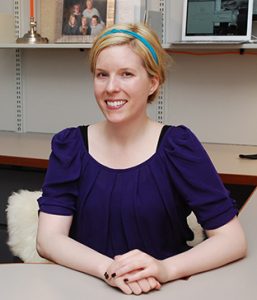
Grace Lemmon, assistant professor of management at DePaul, explains how to manage a multigenerational staff.
We are at a unique place in the dynamic evolution of the American workforce. It’s not uncommon for people in their 60s to be working on teams with colleagues who are the age of their grandchildren. In some cases, younger managers are supervising employees twice their age.
With such age disparities, managers are seeking ways to motivate each generation to engage them and maximize their productivity.
“As a leader, it is important to take a different approach when managing each of the multi-generational employee groups,” says Grace Lemmon, assistant professor of management, who specializes in employee engagement and work-life balance. “Each generation views its employer in unique ways based on intrinsic expectations they hold of what an employer should be, should provide or should promise.”
Lemmon offers these insights and advice for managing the three primary generations in today’s workforce: baby boomers, Generation X and millennials.
Baby Boomers
Born in the post-World War II era (1946-1964), boomers grew up in a time of dramatic social change and economic prosperity. Loyal and hard-working, they seek security and may have stayed at one company their entire careers.
VALUES
Boomers are looking for companies that clearly value their employees. They seek stability and opportunities for advancement or growth. They believe that employees must pay their dues before advancing up the corporate ladder, just as they did.
COMMUNICATION STYLE
Boomers are more apt to want face-to-face conversations, largely because they have worked much of their lives within an environment that didn’t allow for instant communication.
HOW TO ENGAGE THEM
Boomers offer tremendous experience, so finding a task that challenges them can be tricky. According to Lemmon, they are motivated by tasks that appeal to their inner values. Boomers are a pragmatic, goal-oriented cohort, so finding out exactly what they want to accomplish before retirement is key to engaging them.
Generation X
Birth dates for Xers range from the mid ’60s to the early ’80s. They lived through the greed of the ’80s and often distrust authority and large institutions. They are results-driven, highly independent and extremely resourceful. They experiences the early age of innovation and know how to get information.
VALUES
Xers need stability because they are making important life decisions, like whether to have another child or go back to school. They are looking for advancement, but also careers that promote work-life balance. Xers often view work as a mutually beneficial contract between the company and the employee.
COMMUNICATION STYLE
Xers prefer a communication style that allows for reflection and reduced pressure for an immediate response, mainly because they prize separation of work and home life.
HOW TO ENGAGE THEM
Xers want autonomy and growth. They have developed extensive expertise from work experience and have ample information-gathering know-how. Tasks or goals that Xers can do independently and that deepen their skills will be especially fulfilling.
Millennials
Millennials reached adulthood around the year 2000. They are confident, well-educated, socially conscious, highly collaborative, savvy and always connected—to the Internet and each other. Work is important to them, but generally not the biggest priority in their lives. They would love to have a high-paying job, but are willing to give it up to have life experiences.
VALUES
They look up to visionary leaders who can guide them through advancement opportunities. They seek challenging work and want to put their academic experience to the test immediately. They switch jobs often to increase their skill set, and may not be interested in paying their dues.
COMMUNICATION STYLE
As the first generation to grow up surrounded by digital media, millennials prefers to use email, texting and instant messaging over face-to-face meetings.
HOW TO ENGAGE THEM
Millennials perform well on tasks that expand their breadth of knowledge. Because they are in the early stages of their careers, they are eager to build their skill sets, and see new experiences as rewarding professionally and personally. Critical to millennials is instant feedback that is fair and justified.
By Andrew Zamorski
by jlansber | Sep 30, 2015 | Connections
Years ago, when Maureen Meyer (BUS ’90) was an undergraduate at DePaul, she struggled with self-confidence. She wasn’t sure of herself and her abilities as a young person trying to make it in the world.
It’s that same feeling of uncertainty expressed by current business students that Meyer sought to alleviate during a dinner at DePaul’s Loop Campus last spring. The meal was part of the Dinners on DePaul program, which pairs successful alumni with university students eager to learn the realities of career, life and family balance from mentors like Meyer.
“I remember being in their shoes,” says Meyer, the former financial director at Baxter Credit Union, now retired. “I didn’t have a lot of confidence, and I needed a little extra encouragement. That’s what I tapped into when I spoke to students at the Dinner on DePaul event. I wanted to empower them.”
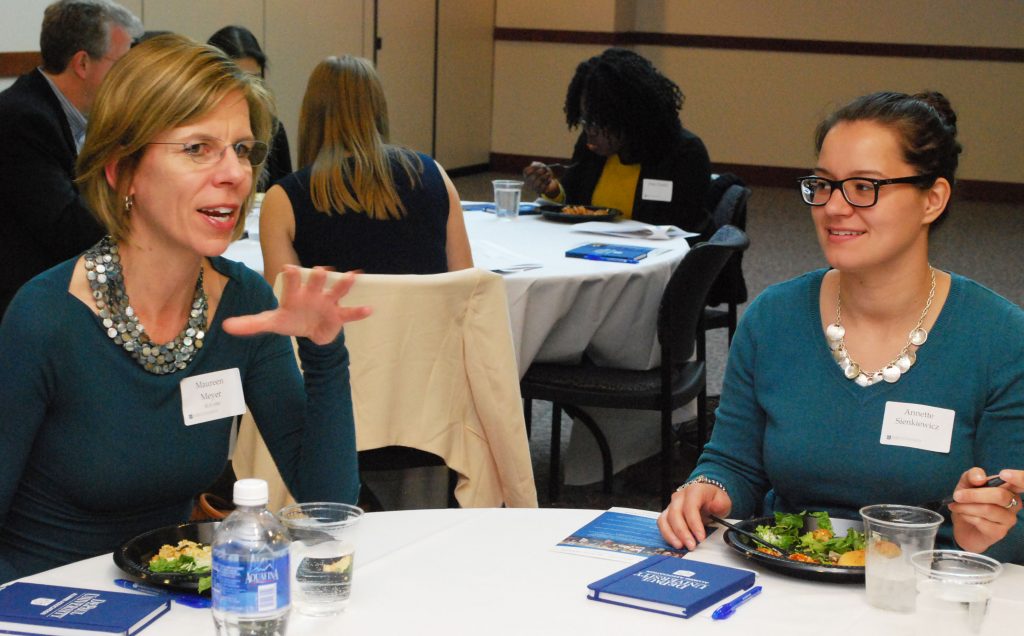
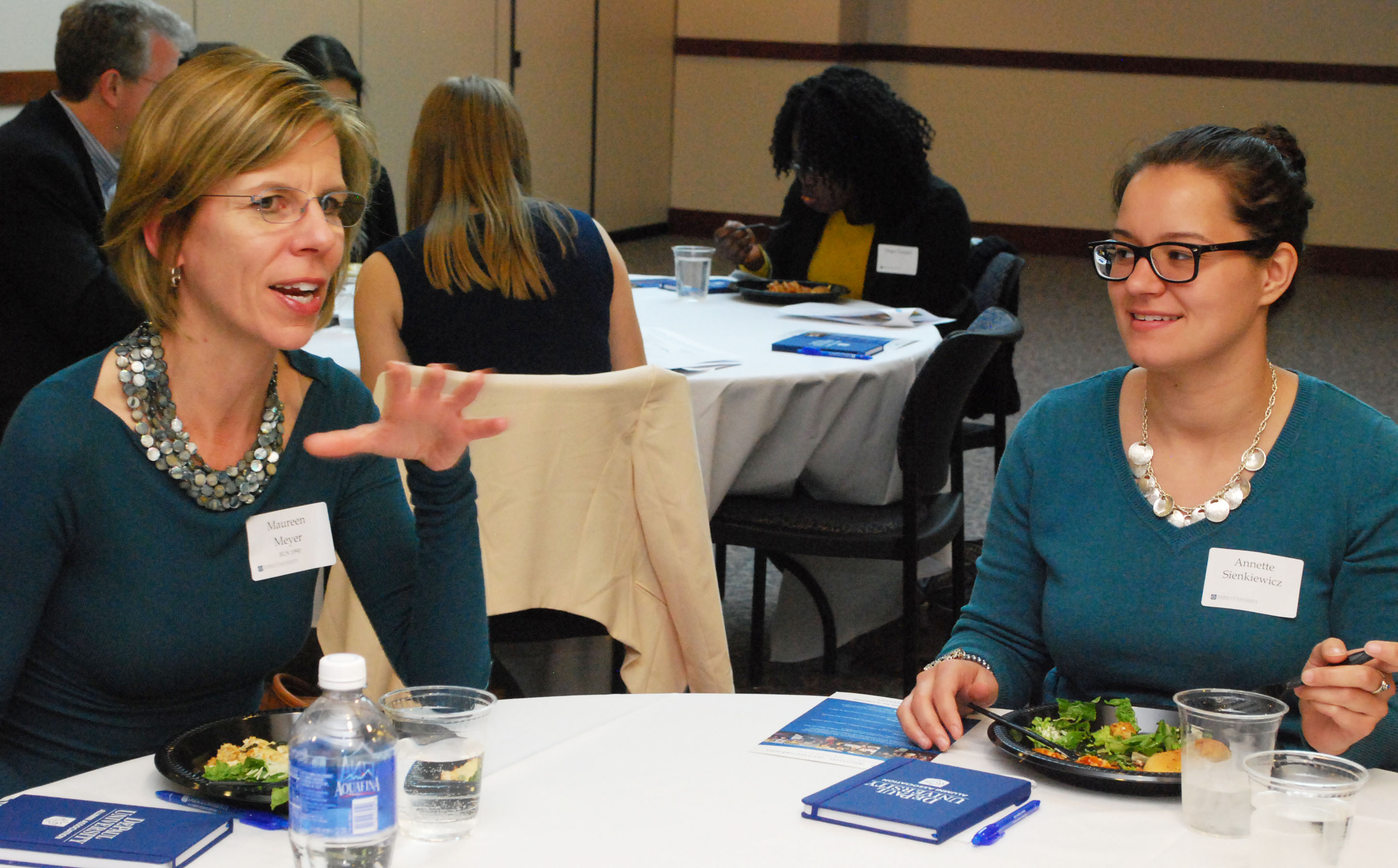
Maureen Meyer (BUS ’90) provides career advice at a Dinner on DePaul event for finance students.
Organized by DePaul’s Office of Alumni Relations, Dinners on DePaul is a series of events where alumni gather to share a dinner with students on campus. The free meal is a bonus for students who get the opportunity to talk personally with professionals working in their chosen field of study. The dinners typically last about an hour.

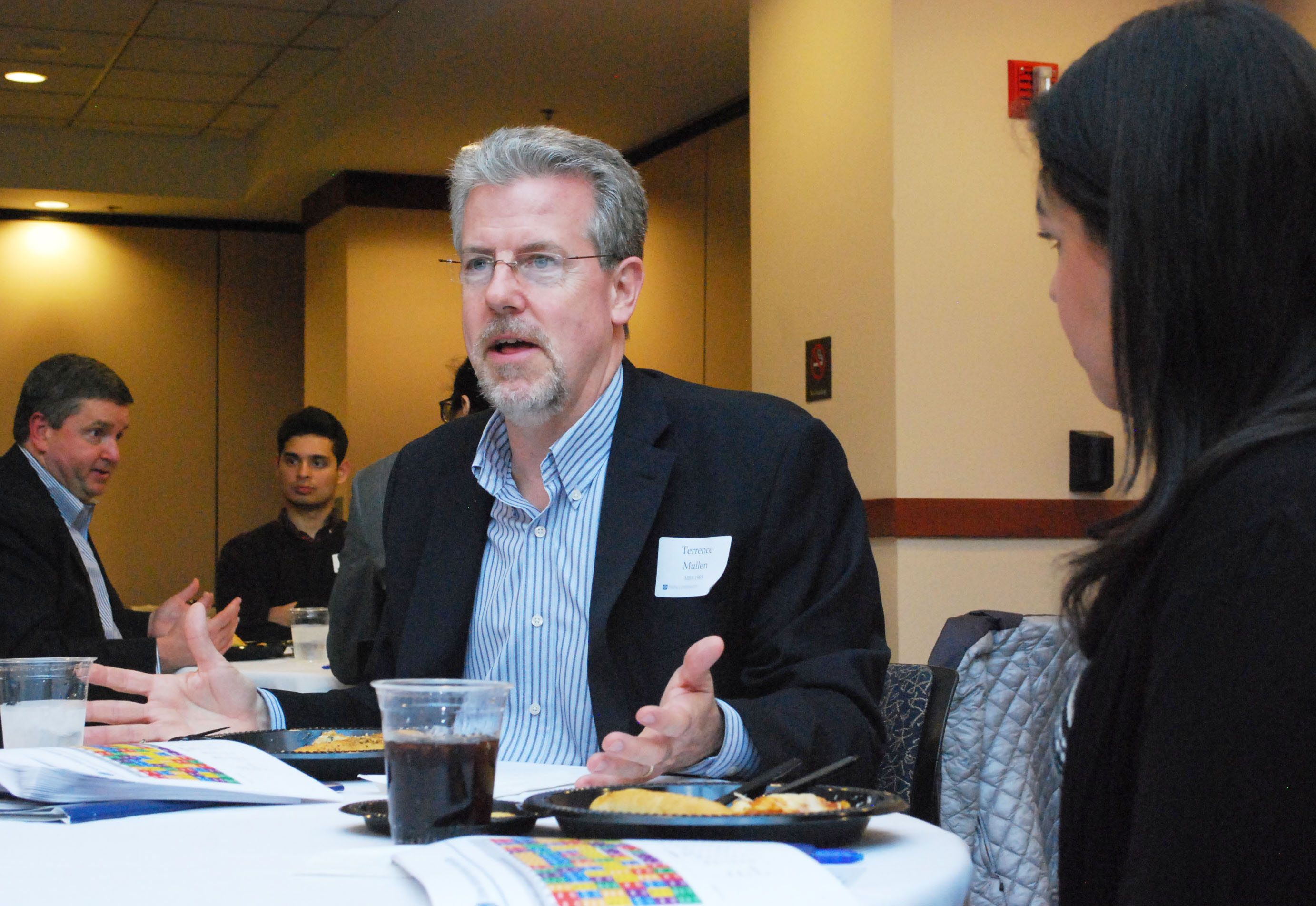
Terrence Mullen (MBA ’85) (left) answers a student’s career questions.
Held in the winter and spring quarters, the dinners feature a diverse set of alumni spanning different disciplines. Two dinners with alumni from the Driehaus College of Business were held during the 2014-15 academic year. One focused on entrepreneurism and the other on the finance industry. Joining Meyer at the finance dinner in May were Rich Mackey (BUS ’87) executive vice president of strategic initiatives at Rosenthal Collins Group, and Terrence Mullen (MBA ’85), managing director of global research and strategy at Allstate Investments.
Organizers say the dinners are a great way for students to get one-on-one attention from mentors. The group is kept purposely cozy; at the finance dinner, there were three alumni and just eight students.
The setting allowed students to delve deeply into career issues not discussed in a textbook or classroom. At the finance dinner, alumni talked about ways to build relationships in the workplace, how to manage one’s career, how to pick the perfect entry-level job and other career-related issues. They also talked about what it was like to be a new professional in their chosen career.
Students said they could relate to alumni whose experiences as young professionals mirrored their own. “It was great to just listen,” said Gina Yost, an undergraduate studying finance and management at DePaul.
Find out more about Dinners on DePaul at alumni.depaul.edu.
By Ovetta Sampson
by jlansber | Sep 29, 2015 | Giving Back
Investment Manager Lori Holland Gives Back to Honor the Past, Secure the Future
By Chris Anderson
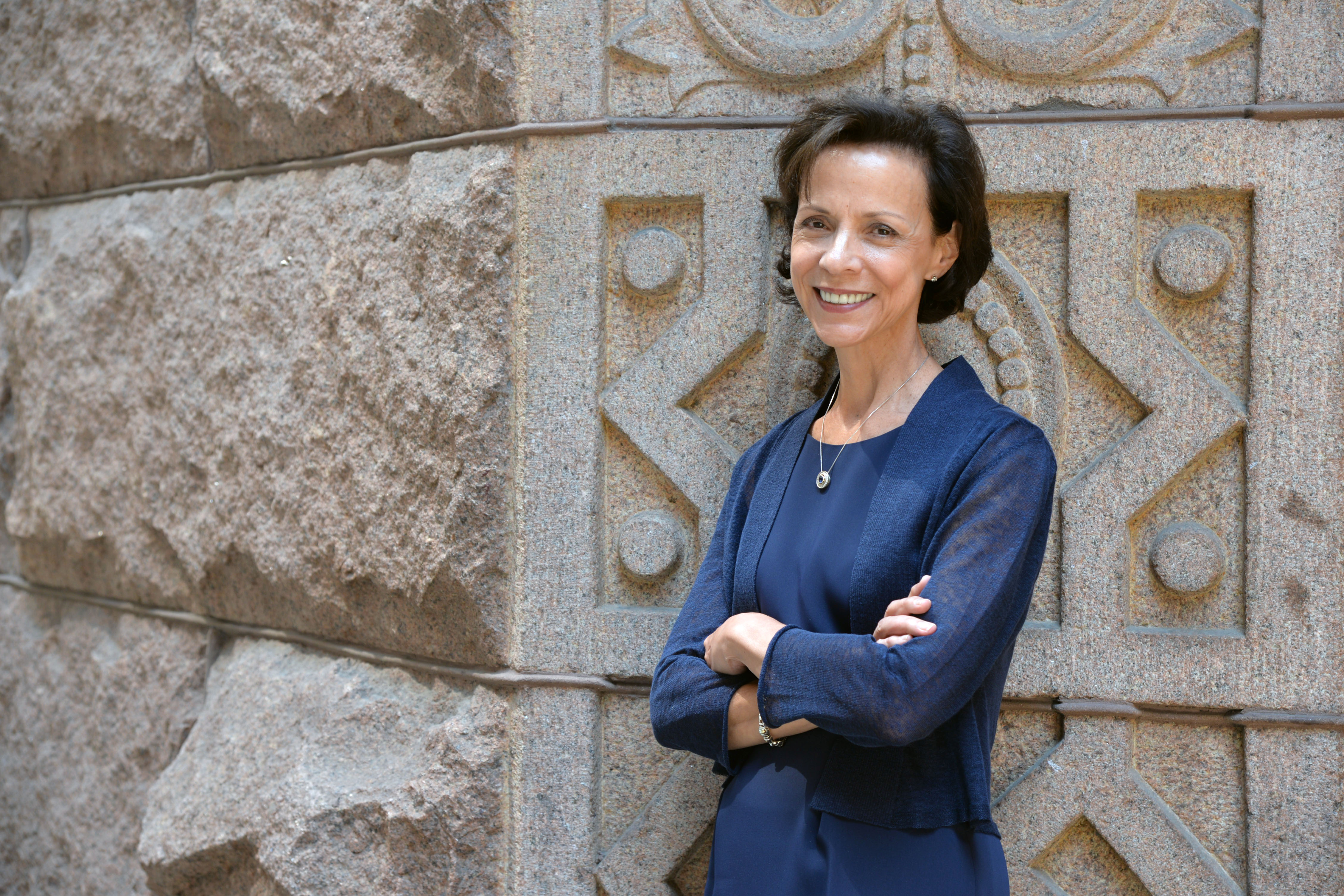
 When Lori Holland (BUS ’84) says she has “basically been working at the same place for 20 years,” she characteristically understates how far she has come in her career.
As managing director and a senior advisor on the multiasset class team at the private investment firm of Neuberger Berman, Holland, a south suburban native, has come a long way from the secretarial school graduate who worked as an administrative assistant at Harris Bank. It was there that she discovered DePaul.
“I grew restless in my job,” she remembers. “Thankfully, Harris offered tuition assistance to encourage employees to finish college.” DePaul’s evening courses fit her full-time work schedule. But she found more than convenience. She found a challenging, yet supportive undergraduate education in finance. “Suddenly, I looked at my transcript and saw that it said sophomore,” Holland recalls. “I remember thinking ‘I really can finish and get the degree.’”
Her DePaul education jump-started her career and led her to move from the bank to a job in an investment firm even before she finished her degree. She joined the boutique firm Lincoln Capital Management as one of the founding members of the fixed-income division.
Holland went on to earn her MBA from the University of Chicago. When Lincoln Capital Management was purchased by Lehman Brothers, she moved there and became a managing director of client services, eventually overseeing the function for the institutional business globally. Holland later emerged from the Lehman collapse as managing partner Neuberger Berman and now serves as a senior advisor on the multiasset class team.
Holland sees a good foundational education and continuing to learn as keys to adapting to change—in any field. During her career rise, she returned to teach as an adjunct instructor in DePaul’s Department of Finance. She joined and later chaired the Finance Advisory Board, and began making regular annual contributions. She helped to fund the advisory board’s endowed scholarships, including one that honors retired Finance Chair Ali Fatemi. Then, during the Many Dreams, One Mission Campaign, she made a major contribution to endow a scholarship in her parents’ name. The John and Regina Letsos Endowed Scholarship benefits finance students in good academic standing who have financial need.
For Holland, who now serves on DePaul’s Board of Trustees, providing future generations of DePaul students the opportunity for a life-changing education is a personal commitment.
“The students are amazing,” she says. “And DePaul remains the same, with first-rate faculty who truly care about students and a mission to really serve students and the community. My parents never had the opportunity to go to college. But they sacrificed a lot to send me to an excellent Catholic high school and always encouraged our education. They would be proud of this gift, and honored.”
Learn more about giving to DePaul.

by jlansber | Sep 2, 2015 | Alumni Profiles
By Lori Ferguson
 As Ukraine’s Finance Minister, Natalie Jaresko (BUS ’87) lives thousands of miles away from where she was born and much closer to the roots that she holds so dear. The daughter of Ukrainian immigrants, Jaresko was raised in the western suburb of Wood Dale, Ill. and later in Chicago’s Ukrainian Village neighborhood. She graduated from DePaul in 1987 with a BS in accountancy and political science and in 1989 earned a master’s degree in public policy from the Harvard Kennedy School of Government.
After a brief stint as economic section chief at the U.S. Embassy in Kiev, Jaresko served as president and CEO of the Western NIS Enterprise Fund, an initiative funded by the U.S. government through the USAID to assist Ukraine and Moldova in establishing sound economic policies and strong leadership. In 2006, Jaresko founded Horizon Capital, where she worked for the next eight years facilitating private investments in Ukrainian businesses. In December of 2014, Jaresko was tapped to be Ukraine’s finance minister, charged with creating a business environment in Ukraine that enables enterprise to flourish. In a recent interview, Jaresko discussed the role that her educational experience at DePaul played in shaping her future and her understanding of how to operate most effectively in a global economy.
In what ways did your educational experience at DePaul shape your future? Did it get you thinking about new ways of doing business or enhance your interest in working abroad?
My educational experience at DePaul was very rewarding. I became more inquisitive and more open to new ideas and perspectives. The environment at the liberal arts campus gave me the opportunity to debate argue, and challenge my own and others’ positions on issues. At the business school, I became more aware of how business operated, what it took to be successful, and of the interlocking parts of any successful business idea.
The opportunity to study abroad—in my case in Budapest—inspired me to work abroad, to work with international issues, and to work in the post-communist world. At the time, Hungary was still communist, but it was “reform” communism, or “goulash” communism. The cracks in the old system were already visible.
What, if any, international business experiences did you have while in school at DePaul?
I was studying abroad at a time when it was clear that an alternative to pure state-run communism was preferable. Still, we couldn’t yet see that the entire system would collapse not long afterward. The region quickly then turned to transition economics and the move to a free market economy within democratic principles. It was a heady, very exciting time in history.
What do you think are the most important things for young people entering the workforce to understand about operating in a global economy?
They must have cultural respect – this is especially important in today’s global economy. They must understand the competitive differences in different economies and how to benefit from them, and they must learn how to create a business environment that spurs entrepreneurship.
What qualities do you look for in those you hire?
First and foremost, I am looking for people who can communicate—oral and verbal communications are key. Next in importance for me is a person’s sense of responsibility and his or her willingness to take on responsibility; I am always looking for a sense of ownership. Of equal importance is the ability of a candidate to turn words and ideas into actions, to document a process, implement and follow up on it. In the end, deeds are most important.
How did your experiences growing up as the child of immigrants affect your outlook, and how has your background influenced your approach to business?
DePaul was a very welcoming place for immigrants – I went to school with many like me. There were a lot of immigrants and also students who were the first in their families to go to college. My classmates at DePaul appreciated their education and worked hard for it. People were more invested in their education. For me personally, I chose a major that I knew would translate into a job, i.e. accounting, which was important for my family. Certainty was important. I came from a family that fled communism and believed deeply in the free market, so DePaul, with its values, its principles, and its teaching excellence were all of great benefit to me. My experiences at DePaul led me to the Kennedy School of Government, which eventually led me to come to Ukraine – to apply those principles in the country of my roots.
Given the current situation in Ukraine, it must be challenging to conduct business. How do you stay focused and what education and/or experience do you draw upon to inform your decisions?
A critical task for our government, and my role in particular as finance minister, is to create a business environment that enables enterprise to flourish. Ukraine is rich in human resources, in natural resources, in strategic geographic location and more. The critical issue is putting those pieces of the puzzle together in an environment of rule of law, transparency, fairness and competition that will enable the greatest benefit from those resources. Tax policy, tax administration, banking stability, currency stability, access to markets, and prudent fiscal policy that does not fuel inflationary processes – all of these are part of my priorities. I am focused on helping turn our economy around and creating the conditions for this growth and prosperity.
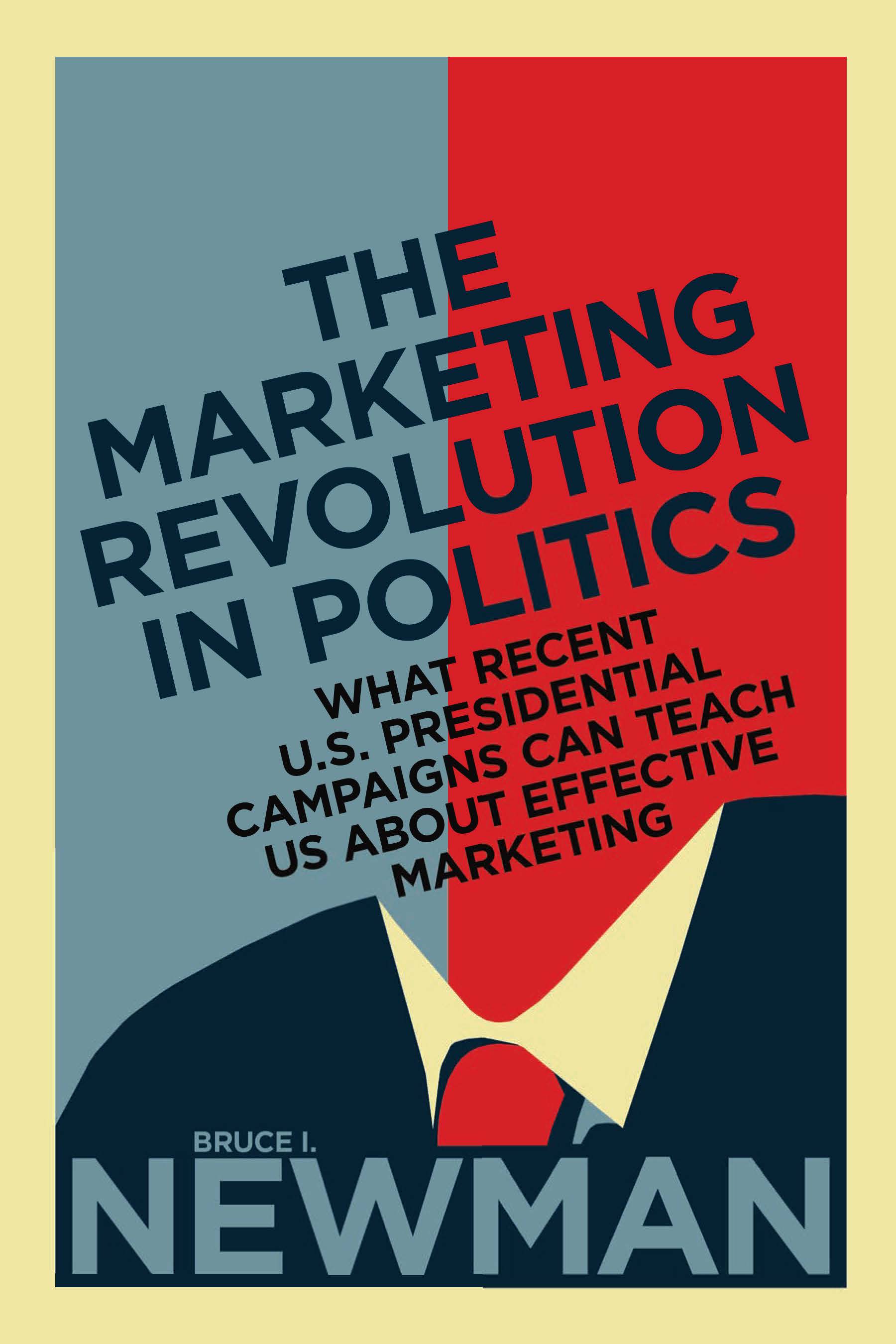 Sophisticated data analysis and creative thinking are essential for designing a successful marketing campaign today, no matter if the goal is to elect a president, sell a product or raise funds for a nonprofit. Marketing Professor Bruce Newman explores these ideas in his new book,“The Marketing Revolution in Politics: What Recent U.S. Presidential Campaigns Can Teach Us about Effective Marketing” (Rotman-University of Toronto Press), which is scheduled for release in January.
 Self-assessment tests are a mainstay of corporate training and development programs that seek to make employees more aware of their strengths and weaknesses on the job. But when you rely on employees to judge their own abilities, are the results accurate?