by jlansber | Apr 30, 2015 | Faculty Focus
 By Jennifer Leopoldt
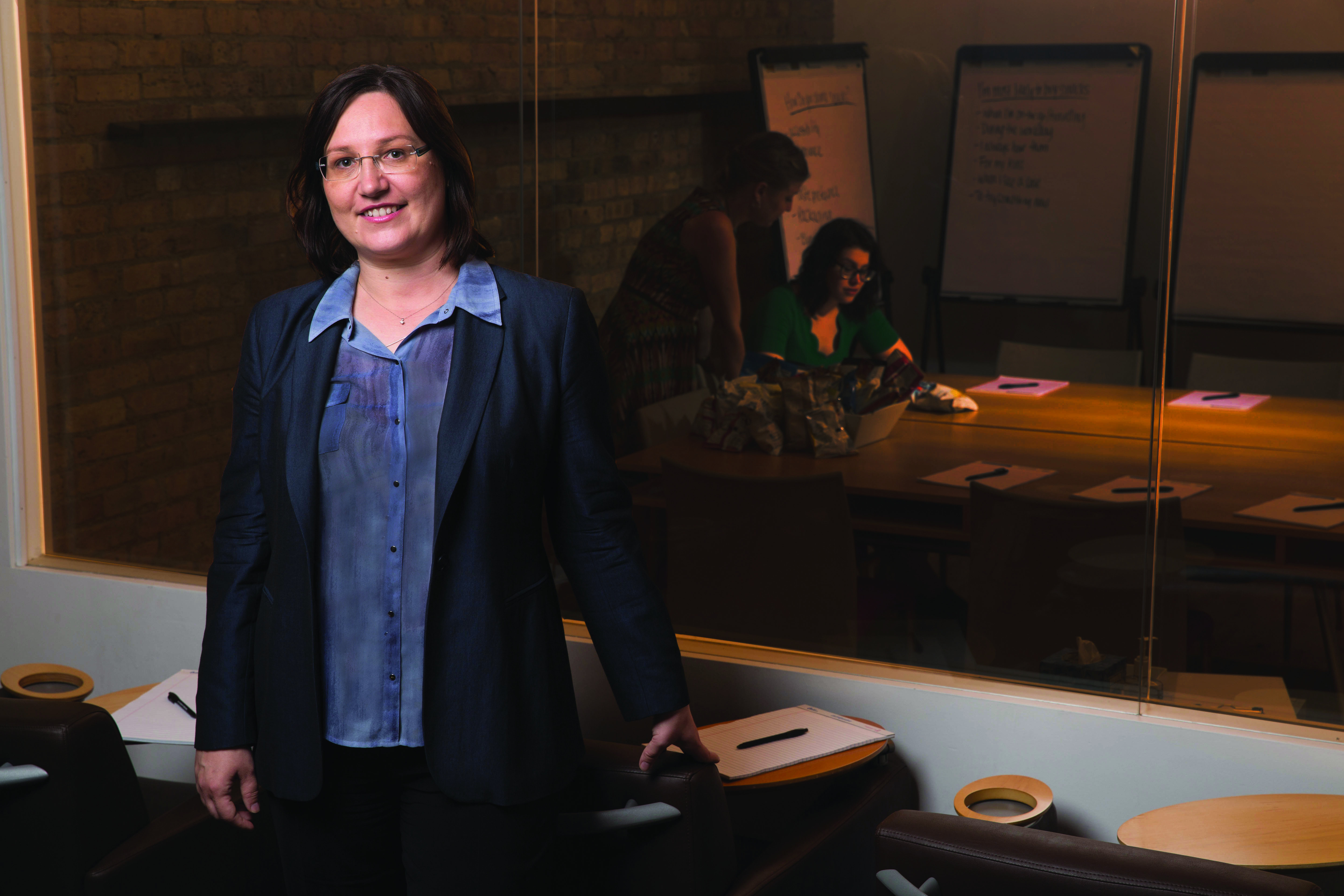
With the rise of big data, marketers are finding new and better ways to analyze and predict consumer behavior—and Marina Girju is preparing DePaul students to do the same.
“We have a hands-on approach. For every model that I’m introducing, I also have a project where the students have to apply the model to the data set. They put everything in the perspective of the consumer or business so we can understand how the analysis is going to influence all of the parties involved,” says Girju, assistant professor of marketing in the Driehaus College of Business.
The term “big data” refers to the collection of large, complex data gathered through multiple methods. For marketing, data can come from point-of-sale scanners at a store, loyalty cards or online shopping, among other sources.
“The data can be very overwhelming—not only the size, but also the richness,” Girju says. “Most data sets have at least 100 variables that explain consumer behavior, and in my course, it’s usually over 300. You can cut it in a million ways and get a million answers.”
Girju knows about putting data into context. Before joining DePaul in 2012, she worked for TNS, a leader in consumer market research, as a data analyst. Her job for the company’s client Frito-Lay was to study the data generated by thousands of U.S. consumers who recorded details about their snacking habits. Girju and her co-researchers then developed DemoImpact, a forecasting model for predicting snack consumption for hundreds of snacks in dozens of categories.
In her own research and in the classroom, Girju continues to examine the connection between big data and business strategy. She gets her undergraduate and graduate students excited about research and analytics by engaging them in real-world projects. No matter the class, Girju reaches students by combining the theoretical with the practical. “A piece of analysis is important, but it is so much better if it’s actually put in context of trends and challenges in the industry,” she says.

by jlansber | Apr 30, 2015 | Scholarly Pursuits
Marketing Professor Al Muñiz studies communities that form among people devoted to popular brands, including LEGO.
When DePaul Marketing Professor Al Muñiz completed his dissertation back in 1998, he didn’t foresee that his research would eventually change the way the marketing discipline and industry—and even other social sciences—thought about brands.
Muñiz’s dissertation was the basis of a Journal of Consumer Research article that introduced the concept of “brand community.” The term describes people who, united by their loyalty to a particular brand, feel a responsibility to share brand narratives and offer support and solutions associated with the brand. Examples include devotees to the Apple, Saab and Volkswagen brands.
“It was the first paper to acknowledge explicitly the social nature of certain consumer brands,” says Muñiz, who co-authored the article with University of Wisconsin Marketing Professor Thomas O’Guinn. “Prior to that, the field of consumer research viewed brands rather narrowly as summations of attitudes and conceived brands and their consumers as a simple consumer brand dyad. Our work called attention to the consumer-to-consumer relationships centered around the brand and showed that these relationships were just as important. It made the social aspect of brands explicit.”
Since its publication in 2001, the article has been referenced more than 3,000 times by other scholars, and Thomson Scientific named it as one of the most frequently cited articles in the business and economics disciplines in 2007. This past fall, the Association for Consumer Research recognized the lasting impact of this pioneering work by presenting Muñiz and O’Guinn with the prestigious Sheth Foundation/ Journal of Consumer Research Long-Term Contribution Award.
Muñiz continues to build on the work. He is currently researching the LEGO brand community, which has helped the toymaker develop new product ideas.
Beyond its contribution to business scholarship, Muniz’s research provides broader insight about human nature.
“A lot of cultural criticism has lamented the loss of community associated with modernity and the advancement of the marketplace,” Muñiz says. “Our work demonstrates that humans, as social beings, find and create community where they will. Sometimes, they will find it around a shared brand. Such a community form is a testament to the durability, resilience and centrality of community to human existence.
By Robin Florzak

by jlansber | Apr 30, 2015 | Professional Development
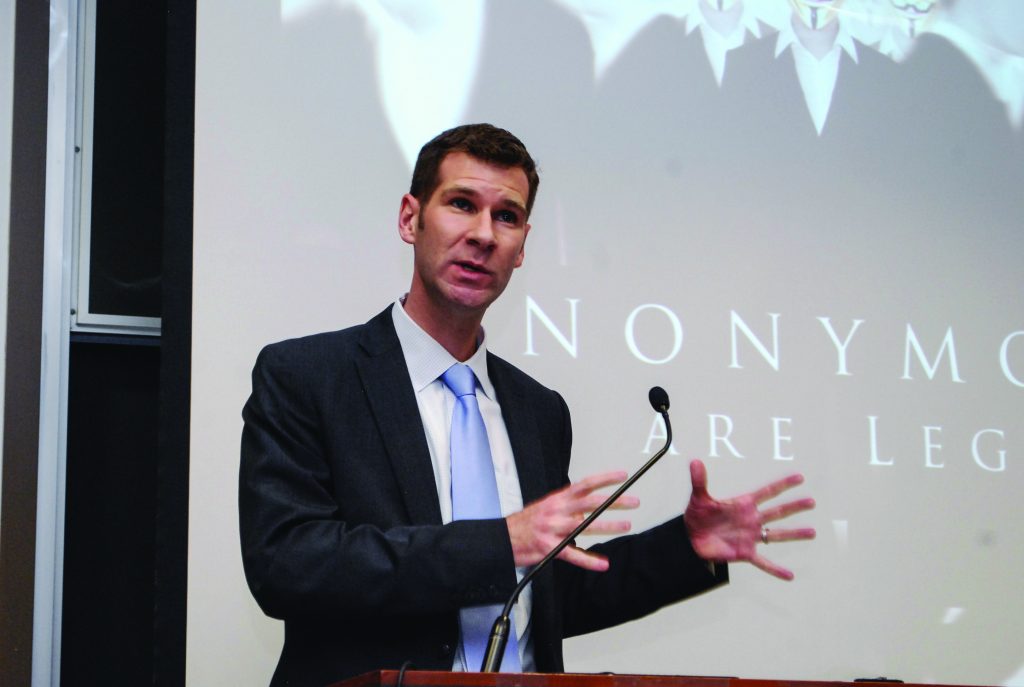
This year’s annual Cyber-Risk Conference, co-sponsored by the Arditti Center for Risk Management, featured cybersecurity strategist and author Peter Singer.
DePaul University’s Driehaus College of Business delivers an abundance of resources to students, alumni, faculty and professionals through its centers and institutes. Leveraging the Chicago business community, these centers deliver a wealth of industry-related programming through networking events, continuing education, conferences and summits.
The following select list highlights some of the center-hosted opportunities available to alumni and other professionals.
Arditti Center for Risk Management
Celebrating the work of Fred Arditti, the late Chicago Mercantile Exchange chief economist and DePaul finance professor, this center bridges the gap between academia and industry by co-hosting topical events in risk management, such as the annual Cyber-Risk Conference.
For information on upcoming programming:
Arditti Center for Risk Management
arditti@depaul.edu
(312) 362-8513
Coleman Entrepreneurship Center
This center hosts a wide range of entrepreneurial events open to the Chicago business community, including a series of workshops that discuss various aspects of starting and growing new ventures. Its mission is to equip students and alumni with the knowledge and skills to awaken their entrepreneurial spirit.
For more information:
Coleman Entrepreneurship Center
cec@depaul.edu
(312) 362-8625
Center for Financial Services
This center holds a number of events open to alumni, faculty, students and staff throughout the year, including a joint conference with Truth in Accounting that explores issues involving pensions, government budgets and debt; a conference that focuses on the theme of sustainable business practices; a wealth management conference supported by LPL Financial; and an executive forum sponsored by PNC.
For more information:
Center for Financial Services
CFS@depaul.edu
(312) 362-8922
Center for Sales Leadership
This center provides educational opportunities for the business community interested in the sales profession. It holds five events annually, including a Career Expo where students connect with business partners.
For alumni who want more information:
Center for Sales Leadership
salesleadership@depaul.edu
(312) 362-6533
Center for Strategy, Execution and Valuation
The center hosts a variety of forums and seminars every year on the latest developments in high-performance company strategy and strategic risk management.
For more information:
Center for Strategy, Execution and Valuation
SEV@depaul.edu
(312) 362-8784
Institute for Business and Professional Ethics
Throughout the academic year the institute hosts events that are open to the public, including lectures with prominent business leaders who speak on various ethics topics. It also holds business roundtables where business leaders/owners exchange ideas in smaller, intimate settings.
For more information:
Institute for Business and Professional Ethics
IBPE@depaul.edu
(312) 362-8786
Kellstadt Marketing Center
KMC offers a wide range of continuing education options, from certificate programs to seminars that help professionals improve their direct, interactive, integrated, Internet and word-of-mouth marketing skills. DePaul alumni receive a 15 percent discount on certificate programs.
For more information:
Kellstadt Marketing Center
jmurray9@depaul.edu
(312) 362-5914
The Real Estate Center
With an active network of students, alumni and industry leaders, the Real Estate Center is a great resource for engagement among real estate professionals from multiple industry disciplines. The center encourages alumni to participate in the DePaul Real Estate Alumni Alliance by networking or becoming guest speakers in the classroom or during the Collegiate Real Estate Conference.
For more information:
The Real Estate Center at DePaul
realestate@depaul.edu
(312) 362-5906
Click here to access a full list of Driehaus College of Business centers and institutes.
By Andrew Zamorski
by jlansber | Apr 30, 2015 | Giving Back
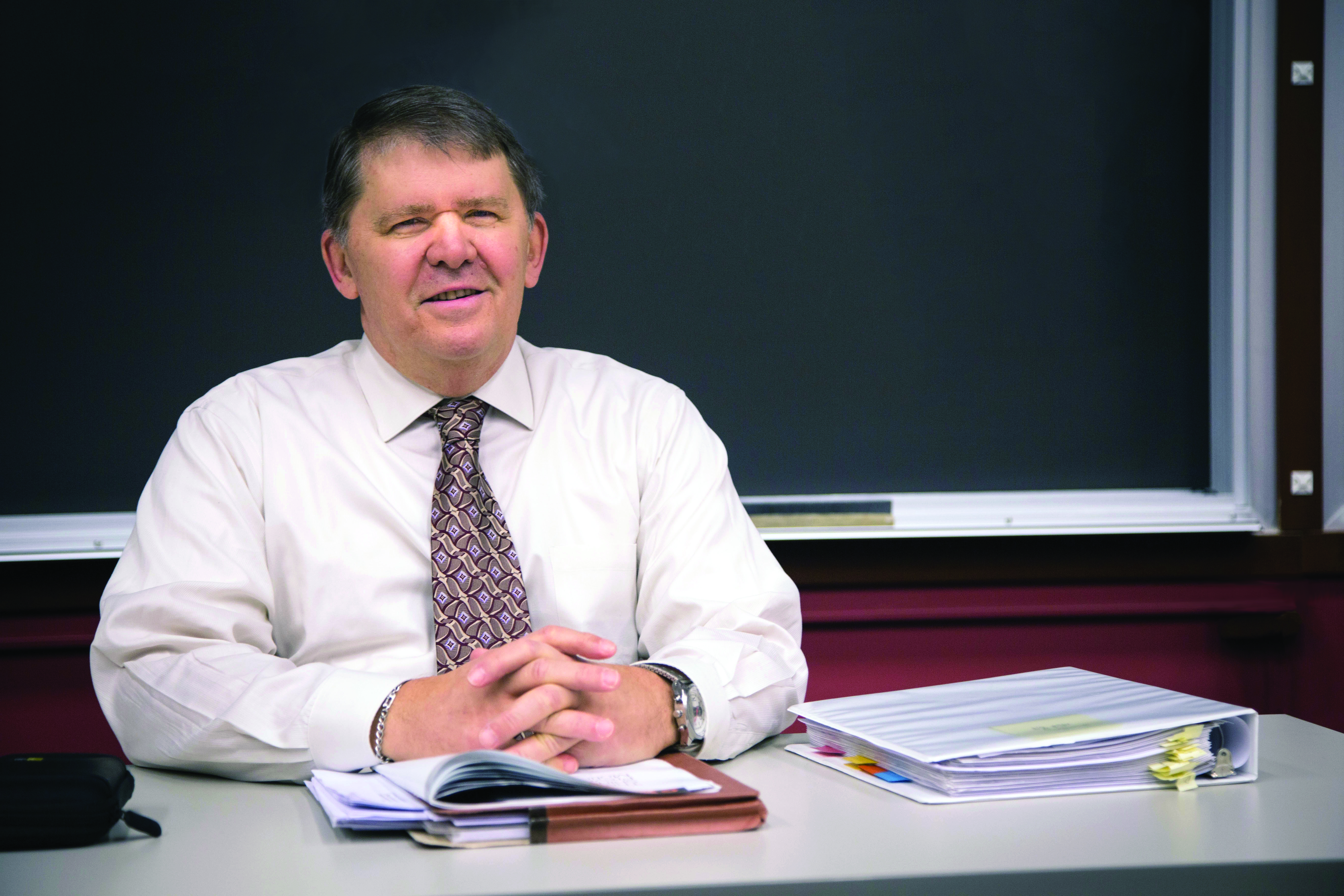
“I’ve always tried to be a gladiator for the client,” says Bill Zink (BUS ’70, MST ’77) of his career in public accounting. “If you’re going to be a gladiator, you had better have a good army behind you.”
That’s one reason Zink and his wife, Kathleen, are longtime donors to DePaul, and why they established the Kathleen A. and William J. Zink Endowed Scholarship in the Master of Science in Taxation Program. “I am devoted to the profession,” says Zink. “I want to help assure that students going into the profession have the very best education.”
Nobody does it better than DePaul”
— Bill Zink (BUS ’70, MST ’77)
In his 46-year career at Grant Thornton International, Zink has overseen the tax practice of more than 120 firms worldwide; one of his main responsibilities is the ongoing education of the tax accountants in the firm.
“The scandals of the 1990s—Enron chief among them—showed the vulnerabilities of the profession and the damage that poor training can do to companies and to the confidence of clients and the public,” Zink says. “It is essential that we have good education and training.”
Zink’s father wanted him to go to Northwestern, but at the time the school had no undergraduate business program. He chose DePaul, and when he met with the legendary accounting professor Eldred “El” Strobel, he saw his future.
“He listened to me, what my interests were and my strengths, and within minutes he had mapped out not only my academic program, but also my career path,” Zink recalls. “He was an incredibly dynamic person, a truly great teacher, passionately committed to his students and to integrity and excellence in the profession.” Strobel served as a member of DePaul’s faculty from 1946 to 1980 and is credited with establishing many of the foundations of the School of Accountancy. The school’s Strobel Scholars program is named for him.
“Kathleen and I are so happy to be able to help future generations of students have the kind of experience that I had when I was at DePaul,” says Zink. “It’s so important that tax professionals get a good education and acquire the kind of learning skills they will need to continually adapt their expertise to a changing business and tax landscape. DePaul gave my family a wonderful life together, and maybe we can do the same for others.”

by jlansber | Apr 30, 2015 | Features
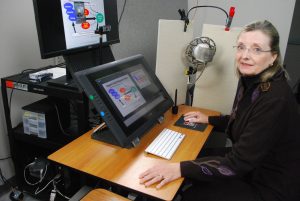
Diane Kuhlmann, McGladrey MST program instructor.
When Tom Blaze (MST ’08) decided to earn his Master of Science in Taxation, he benefited from a partnership between McGladrey and DePaul. “McGladrey had a program where DePaul instructors would actually come to our seminar room, which made it very, very convenient. It was almost like it would be foolish not to do it,” says Blaze, a partner in McGladrey’s State and Local Tax group, who earned his degree in 2008.
The partnership program began in 2005, and at first, DePaul faculty would go to McGladrey’s main office and teach classes that were broadcast online through the company’s technology. Two years ago, DePaul took over the technology, and now classes are taught and broadcast from DePaul’s Loop Campus. Students can either come to class on campus or log on remotely to view the lectures. While most of the students are located in Chicagoland and the Midwest, the program also draws McGladrey employees based as far away as California, New York and Washington, D.C.
The partnership between McGladrey and DePaul came about in part because an advanced degree is a necessity in the tax field. “The MST brings the knowledge you need in order to function as a tax professional. It takes a lot longer to get this knowledge if you’re just getting it doing client work. You’ve got to have both—you need that real-world experience as well as this knowledge,” says DePaul Instructor Diane Kuhlmann.
Kuhlmann offers an interesting perspective on the program. “For 10 years, I was the director of training for tax professionals at McGladrey. I was involved with the MST program when working there, and now I’m at DePaul working on the other side,” she explains. “What we’ve worked really hard to do is to make sure this online program is equivalent to DePaul’s regular program. Students who are attending the McGladrey program are not getting an ‘MST light.’”
Blaze also has seen the program from both sides, first as a student and now as an instructor. “While I was in the MST program, I developed a lot of respect for the DePaul instructors. They all had practical experience, and they brought examples of what they were doing in their day-to-day jobs,” says Blaze, who now teaches ACCT 570: State and Local Tax at DePaul.
After 10 years, the program is still evolving. The format used to be synchronous, meaning it was designed so all students were watching together at the same time, no matter where they were located. Now, Kuhlmann says, DePaul is moving to an asynchronous platform with prerecorded lectures. The class also includes a weekly webcast. Students can choose to attend the webcast and interact with the instructor in real time or access the recording whenever is convenient for them. “As time goes on and as technology and platforms change, we’re continuing to upgrade the program.”
Continue reading with CEO Initiative Brings the Classroom to the Workplace.